Category: Technology Trends

  • Digital Transformation ROI: A Complete Guide for Businesses

    Digital Transformation ROI: A Complete Guide for Businesses

    As the leader of a company, you have probably heard “Go Digital!” several times and may have even implemented it by now. But the first question that comes to mind is “What result would we achieve and how fast?”.
    Companies have no choice but to embrace digital transformation if they want to remain head-to-head in the competition with their competitors and draw in more customers.

    And despite investing millions and billions in digital initiatives, companies still struggle to properly measure their Return on Investment (ROI). That is why, without a proper strategy, technique, and measurement, it would be like playing with fire.

    In this article, we are going to explain all about ROI, the important KPI’s, and a roadmap to help you save time and value.

    What is the ROI of Digital Transformation?

    “The ROI of digital transformation refers to the measurable benefits an organization gains from adopting digital technologies, encompassing financial savings, increased efficiency, and enhanced customer satisfaction.”

    In simple terms, it can be explained as: 

    ROI = (Total Benefits − Total Costs) ÷ Total Costs

    Don’t just focus on productivity when looking at ROI; it should show the value of your business gains, reduced risks and costs, and better customer experience.

    Direct and Indirect Value:

    Direct (measurable) value:
    • Labor hours saved 
    • Lower infrastructure/TCO (Total Cost of Ownership) 
    • Reduced error rates 
    • Conversion uplift 
    • Churn reduction 
    • Faster cycle times 
    • Fewer tickets.
    Indirect (Strategic) value:
    • Improved NPS (Net Promoter Score)/CSAT (Customer Satisfaction Score) 
    • Brand trust 
    • Analytics maturity 
    • Resilience 
    • Digital trust/cybersecurity posture that protects revenue.

    Three Types of ROI in Digital Transformation

    To measure ROI effectively, you first need to know where the value of digital transformation lies, and these are: 

    Operational ROI:

    This is when technology helps businesses save time and effort by automating routine tasks and cutting down on manual work. With this, companies can lower costs and get more done with the same resources.

    Example: 

    Instead of manually scheduling meetings and sending reminders, a digital calendar tool can automatically handle such tasks. This reduces mistakes and saves time so that the employees can focus more on important tasks like customer service and planning projects.

    Customer Experience ROI: 

    Businesses can respond faster and provide services quickly by using tools like chatbots and self-service portals. This gives customers more ways to connect. When a customer is happy with the service, they come back more often and stay for longer.

    Example: 

    A clothing store’s app remembers the customer’s past purchases and suggests products that align with the past purchases. This way, the experience feels more personal and the service is faster.

    Strategic ROI:

    Owning a business means you need to have a good strategy. And strategy in ROI means investing in tools that would scale your business –like cloud platforms, mobile-friendly apps, and AI-powered analytics.

    This strategy helps you to grow your business over time and stay ahead in the competition.

    Example: 

    A retail chain moving its systems to the cloud so it can quickly open new stores or launch an online shop without rebuilding everything from scratch.

    Why it’s Important to Measure Digital Transformation ROI

    Measuring the ROI of digital transformation isn’t just about costs and savings. It proves whether your strategy is working, helps secure future funding, and shows where improvements are needed.

    Companies that track ROI properly are twice as likely to succeed because they can make smarter decisions, use resources better, and clearly show value.

    The hard part is that digital transformation is ongoing—it’s not a one-time project. It involves new ways of working, cultural changes, and long-term shifts, which makes ROI harder to measure.

    A CFO-ready measurement framework

    1. Scope and baseline:

    • Make a list of projects you are tracking. For example: moving to cloud, updating CRM, and adding AI tools.
    • Record your “before” numbers, like costs, time taken, error rates, customer satisfaction, sales per employee, etc.
    • Assign someone for each department (sales, service, finance) so someone is accountable for tracking results.

    2. Quantify benefits from all angles:

    Don’t just count quick wins, look at the four value areas:

    • Revenue growth: more sales, upselling, faster onboarding.
    • Cost savings: fewer manual hours, lower system costs, less rework.
    • Flexibility: systems that make it easier and cheaper to add future projects.
    • Risk reduction: avoiding cyberattacks, fines, or costly mistakes.

    3. Choose metrics & KPIs that map to outcomes:

    Choose the right KPI’s (Key Performance Indicator) for a better business outcome.

    • Efficiency: faster processes, fewer delays, more automation.
    • Customer experience: satisfaction scores, adoption of digital tools, conversions.
    • Financials: payback period, cost savings, profit margin improvements.
    • Workforce: time saved per employee, fewer tickets, easier access to information.

    Check the results every few months and annually, because the benefits of digital transformation usually grow bigger over time as more people start using the new systems.

    4. Calculate ROI with payback and NPV:

    • Payback period = how many months until you break even.
    • NPV/IRR = ways to show long-term financial value, adjusted for time.
    • Sensitivity testing = what happens if adoption is slower or benefits are smaller?

    5. Build a value-realization operating rhythm:

    • Review results with finance every month.
    • Utilize dashboards or integrate ERPs to track progress in real-time.
    • Include costs for security and compliance up front, so that there are no surprises later.

    Quick Playbook: How to Get the Best ROI from Digital Transformation

    1. Connect to business goals (not just tech):

    • Always link projects to real business outcomes.
    • Example: 

    “Cut order processing time by 25%” or “Increase online sales by 2%.”

    2. Start with quick wins.

    • Focus on projects that show results fast (90–120 days).
    • Examples:
      • Automating request approvals.
      • Adding self-service FAQs or chat.
      • Using AI tools to speed up sales proposals.

    3. Track results from the start.

    • Build measurement into your workflows.
    • Track things like:
      • Time before vs. after automation.
      • Conversion rates with/without new tools.
      • Hours saved, calculated with finance.

    4. Don’t forget hidden costs.

    • Don’t only count benefits—also include risk savings.
    • Example: avoided downtime, compliance fines, or cyberattack costs.
    • Gartner recommends always including security and compliance measures in ROI, so you don’t face surprise costs later.

    5. Focus on adoption, not just features.

    • A tool only pays off if people actually use it.
    • Invest in training, in-app help, and change management.

    6. Tell a clear story to leadership.

    • Use numbers and real stories.
    • Share customer feedback, employee improvements, and future opportunities unlocked.

    Example of ROI Calculation 

    Year 1 – Costs:

    • Cloud + software subscriptions: $250,000
    • Setup & training: $180,000
    • Security & compliance upgrades: $70,000
    • Total Costs: $500,000

    Year 1 – Benefits:

    • Automated support (fewer tickets): $108,000 saved
    • Faster operations (time savings): $216,000 saved
    • Higher sales conversion: $25,000 gained
    • Reduced downtime risks: $75,000 saved
    • Total Benefits: $424,000

    ROI (Year 1):

    • ($424k – $500k) ÷ $500k = −15% (a loss in the first year).

    Year 2 – With steady benefits & lower costs:

    • Benefits: $560,000
    • Costs: $200,000
    • ROI: +180%
    • Payback: ~16 months

    This example tells exactly why multi-year thinking is important. Returns will usually start small or even in negatives, but then grow when adoption is stabilized.

    Common Pitfalls—and How to Avoid Them

    1. Not checking the starting point:

    It’s very important that you record your current stats before making any changes so that you can later compare it with your results.

    2. Using tools that are not adopted:

    Implementing new features is useless if employees and customers are not adopting them. Keep track of what is used and provide training to boost adoption.

    3. Focusing on only cutting costs:

    Reducing costs is essential, but not enough. Enhance customer satisfaction and flexibility, while reducing risk factors. These are what bring true value in the long run. 

    4. Ignoring data and AI:

    Majority of the value today comes from analytics, cloud, and AI. So don’t leave them out of your roadmap.

    Conclusion

    Digital transformation ROI is not just about numbers; it’s about proving that your investment in technology is creating real business value. From reducing costs and risks to improving customer experience and scaling future growth, ROI shows whether your strategy is working. 

    The key is to measure consistently, link results to business goals, and think long term. Companies that do this are far more likely to succeed in today’s competitive digital economy.

    Still Stuck On What To Do?

    The journey of digital transformation might be ongoing, but the results yielded will be worth it. By starting with quick wins, tracking progress, and focusing on adoption, your business can steadily increase ROI and secure long-term growth.

    If you’re unsure where to begin or how to measure results, consider partnering with experts like Largify Solutions. With experience in ERP, CRM, cloud, and AI-powered tools, Largify helps businesses turn digital investments into measurable outcomes.

    The faster you align digital projects with business goals, the sooner you’ll see real ROI. Don’t just go digital—go digital with purpose.

    So don’t wait for the right time, take action now! And book a free consultation today!

  • Digital Marketing in the Age of AI

    Digital Marketing in the Age of AI

    Artificial Intelligence has made its way into every field, and the marketing world is no exception. AI is redefining how brands convert, connect, and engage. For businesses, this is great as AI opens the doors to speed, scale, and precision in digital marketing. 

    In this article, we will understand how AI is helping change the digital market for the better and how companies like Largify Solutions help businesses take advantage of this transformation.

    AI Marketing Explosion: Growth, Scope & Tools

    Growth of AI in the Digital Market: 

    The global AI market was valued at USD 233.46 billion in 2024, while it is expected to reach USD 294 billion in 2025. And by 2030, it is expected to soar to nearly USD 1.77 trillion, reflecting its monumental impact across industries.

    Generative AI in Ads:

    The IAB reports that 86% of advertisers are using or will be using generative AI to create video ads. It is projected that AI will produce 40% of all video ads by 2026.

    Personalization & Predictive Marketing

    Predictive Analytics:

    One of the biggest benefits of AI is its ability to collect and analyze massive amounts of data in a short time and accurately at that. It mines both structured and unstructured data to track behaviour and give a strategy. 

    Hyper-Personalization:

    With AI, brands can analyze individual customers’ preferences and give recommendations and advertisements according to those. This type of personalization has proven to increase engagement and purchase rates.

    AI helps marketers target customers with the right info at the right time.

    Search is Changing: SEO, AEO, and GEO

    For the past several years, businesses have focused on SEO (Search Engine Optimization) to rank higher on Google. But things have changed with AI-powered assistants like Google’s Search Generative Experience (SGE) and tools like ChatGPT.

    Marketers now opt for:

    AEO (Answer Engine Optimization): Creating content that AI assistants can easily pull as direct answers.

    GEO (Generative Engine Optimization): Structuring content to appear in AI-generated responses and summaries.

    Ethical Use of AI: Balancing Innovation with Responsibility

    We have already seen the backlash from deepfake ads and AI-generated campaigns. And ethical concerns are raised with biased algorithms, misuse of data, and misleading content.

    Therefore, it is very important for companies to know how to use AI responsibly: 

    • Be transparent about when and how AI is used.
    • Avoid reinforcing stereotypes or biases.
    • Ensure customer data privacy and security.

    Aside from it being just a responsibility, it will give you an advantage over other companies since you will have gained the customers’ trust.

    AI in Advertising: Smarter Campaigns, Better ROI

    Digital advertising has also seen a lot of progress due to AI. Businesses that have invested in AI marketing have reported a 3-15% increase in revenue, while others report a 20% increase in their ROI sales.

    Platforms use AI to: 

    • Predict the best ad placements
    • Adjust bidding strategies in real time
    • Test multiple ad variations instantly
    • Deliver ads to hyper-targeted audiences

    To get the most out of their money and gain profits, major companies are investing in themselves with AI-powered tools.

    At Cannes Lions, 71% of CMOs said they plan to invest over $10M annually in AI.

    Workflow Revolution: Automation with Human Touch

    AI-Powered Audits: 

    In order to evaluate AI-readiness, next-generation SEO audits now consider topical alignment, schema usage, response clarity, and human tone.

    Balanced Creation: 

    Use AI such as ChatGPT, Gemini, and Claude for research and inspiration, then improve with editorial review, case studies, statistics, and human insight.

    Smart Toolset: 

    Tools like Content at Scale V3, NeuronWriter, Surfer AI, and Thruuu are designed to match content with AI ranking logic.

    Popular Use Case of AI in Marketing

    Content Marketing:

    • A lot of time and expertise are required in content marketing, and you can create valuable content without breaking a sweat. Here, AI plays an incredible role in the automated content workflow.
    • The content team can increase content production speed by using AI for analyzing keywords, creating outlines, and optimizing with NLP suggestions.

    Social Media Marketing:

    • If you are looking to build a strong social media presence, then AI is the right tool for you. 
    • Since it can be hard for you to come up with new content every day, AI can help with scheduling your posts, generating text copies, and coming up with content ideas that would appeal to your audience. 

    Video Marketing:

    • We can agree that video marketing has to be one of the hardest tasks to do, from coming up with ideas, script, creation, editing, voiceover, etc. 
    • But AI has made all of these jobs so much easier. AI-driven script generation has rapidly become a mainstream marketing practice.

    Example of AI in Today’s Marketing

    Netflix is a great example of the use of AI for hyper-personalization. Netflix is the largest entertainment platform, and 80% of the show viewing is based on personal recommendations.

    People don’t subscribe to watch every type of content, and for this reason, Netflix provides users with a personalized experience. They use AI-driven machine learning technology to show content based on what the user usually watches.

    This has proved useful since everyone has unique preferences, and most of the shows are viewed from personal recommendations.

    Conclusion

    Digital marketing in the age of AI isn’t about replacing humans; it’s about elevating them. AI is revolutionizing personalization, content creation, SEO strategy, and ROI measurement. 

    But the brands that truly thrive will be those who marry automation with authenticity, algorithmic precision with empathy, and speed with strategic foresight.

    Are you ready to lead in this AI-powered future?

    Still wondering how businesses use AI in digital marketing? Then Largify Solutions has just the thing to offer. 

    Largify Solutions helps businesses navigate the world of AI.

    Their expertise covers: 

    AI-powered tools & automation: helping businesses implement generative AI, predictive analytics, and intelligent chatbots.

    Digital marketing services: from SEO and paid ads to social media campaigns designed for the AI era.

    Web, mobile, and custom software: building platforms that support personalization, scalability, and secure data handling.

    Cloud and cybersecurity solutions: ensuring that digital systems are safe and reliable.

    So don’t fall behind in the competition and book a free consultation today!
  • 10 Benefits of ERP in Business Growth

    10 Benefits of ERP in Business Growth

    Businesses are constantly on the search for ways to boost their efficiency, operations, data accuracy, decision-making, and most of all, customer experience. The current era of businesses is fast-evolving and competitive. 

    This is where ERP shows up and steals the spotlight. Enterprise Resource Planning (ERP) is a type of software that organizations use to manage and integrate the essential parts of their businesses, including finance, HR, manufacturing, supply chain, and more.

    ERP systems can not be underestimated as they offer numerous benefits and ease to one’s business. 

    So if you are thinking of scaling your business with an ERP system, then here are the key benefits you must know: 

    1. Centralized Data / Unified System

    One of the biggest problems faced daily in businesses is when different department stores manage their data separately, which leads to miscommunication, errors, duplicate data, and delays. With various applications and spreadsheets, it becomes harder for the staff to search for what they need.

    ERP solves all these problems by integrating various functions into a single platform. This way, staff have access to up-to-date information, enabling them to make faster and more efficient decisions.

    Whether it’s overseeing sales, managing inventory, or monitoring cash flow, ERP ensures that the owner has insight into everything so that they can move and grow faster. 

    2. Better Efficiency and Productivity

    ERP automates any repetitive tasks and any routine tasks, from payroll to order fulfillment, allowing your team to focus on other valuable activities like customer engagement. Such automation will not boost your productivity, but it will reduce human errors that may cause problems, saving you from unnecessary headaches. 

    For example, with automated inventory management, excess inventory costs are reduced and stockouts are minimized. This also ensures customer satisfaction as stocks are always available.

    3. Financial Management and Cost Savings 

    The ultimate goal of every business is profit maximization, and financial management is crucial for the growth of any business. 

    ERP helps manage and track costs by: 

    • Real-time budget monitoring.
    • Inventory management by reducing excess products.
    • Improvement in procurement.
    • Identifying underperforming areas.

    ERP systems can help prevent over-production and over-stocking during rush hours, reducing costs. Just by taking this simple step, you save so many costs, which you can then reinvest in your growth.

    4. Boosted Customer Service

    For just a small mistake, you could end up losing a customer to your competitors. That is why customer experience is so important for your business. 

    Improved Customer Data Management: 

    ERP allows a comprehensive view of customer behaviour and interaction by collecting and gathering customer data. This data helps businesses to better understand their customers and personalize interactions. Better data means better experience, leading to not only more but also loyal customers.

    ERP systems also integrate Customer Relationship Management (CRM) features, allowing businesses to: 

    • Maintain customer histories
    • Personalize communication
    • Quicker response to inquiries and issues
    • Track orders from purchase to delivery

    Largify Solutions guarantees that a good experience will not only bring back customers, but they will also tell others about your products, bringing in more traffic.

    5. Scalability and Flexibility

    Every company starts from somewhere small, but over time it tends to grow. Many companies want to scale their business globally. But one thing to keep in mind is that as your business grows, work and responsibilities grow along with it.

    That is the reason why many businesses are opting for ERP systems, so that during progress, all the tasks can be easily and effortlessly managed without any loss. And so as your business grows, it will grow along with it.

    Largify Solutions Microsoft Dynamics 365 ERP has helped many businesses scale globally by helping them integrate a custom ERP that suits their needs and system best.

    6. Improved Data Security & Risk Management

    Protection and privacy of data are major factors in running a business. One wrong move and it can lead to some very serious consequences. And that is why ERP plays such a crucial role here, since it organizes all the data and info in one place, the risk of it being leaked decreases by a whole lot.

    Cloud ERP distributes information across multiple remote servers, and you can also control who can see and edit what data, restricting employees to only see the information they need to and protecting crucial activities from being leaked.

    Modern ERP tools have features like password protection, data encryption, and layered user access control, ensuring no unauthorized personnel can misuse important company information.

    7. Improved Reporting & Decision-Making

    One of the greatest benefits of the ERP system is to let you create custom reports for any part of your business, like sales, inventory, finance, or HR, so you can track what’s working well and what’s not. The best part is that the data updates in real time, so you get the latest numbers instantly. 

    This helps you make quick, smart decisions, instead of waiting for old reports that might already be out of date. We can all collectively agree that making smart decisions is crucial, and it can not be done without having proper knowledge of data.

    Cloud-based ERP systems have a diverse range of business applications that provide forecasts, comparisons, reports, and graphics for team members to make better business decisions.

    ERP provides a user-friendly dashboard that gives managers an update at a single glance. It allows you to delve deeply into corporate data in order to comprehend key performance indicators and take proactive measures to enhance performance.

    8. Compliance Support

    ERP systems help businesses stay compliant by keeping accurate, current, and searchable records that are easy to access during audits. Customizable reports make it simple to monitor compliance and make quick adjustments when needed.

    Numerous ERP programs automatically update when requirements change and support particular standards like GAAP or SOX. By doing this, companies may stay in compliance without having to keep up with every new rule or regulation.

    In fast-changing, highly regulated industries, this is a major advantage. It helps prevent costly legal penalties, saves time, and ensures the company always stays on the right side of industry and government requirements.

    9. Transparency & Insights

    Various departments within an organization can readily access the information recorded in an ERP system. 

    For instance, the warehouse provides real-time inventory data to the finance department. This enables them to estimate purchasing demands, manage budgets more precisely, and make sure there is adequate inventory to satisfy demand without going over budget. 

    By providing access to critical corporate data, ERP systems provide visibility. With complete context, this enables teams to make decisions more quickly and effectively. 

    For instance, the purchasing staff can prevent overstocking or running out of supplies if they are aware of which shipments are currently en route.

    10. Mobility

    The biggest benefit of ERP systems is the ease of their accessibility. Your team members can now access the database from anywhere in the world. All they need is an internet connection to their electrical device.

    Now they don’t have to be working in the office; they can do their work from any remote geographical location.

    Conclusion

    ERP isn’t just a trend, nor is it a luxury – it’s the need of every business that wants to grow and scale. It saves a man his time, money, and effort while providing excellent results. 

    This system is designed to help businesses, and it can also be customized to their needs. ERP systems can help a company avoid facing huge losses, especially for startups.

    By organizing all your data and information it saves you from a huge headache. And collecting and tracking customer data helps you personalize interactions and increase customer experience.

    Stuck on where to start?

    Are you starting a new business, or do you want to scale your already well-established operations, and you are just not sure where to start?

    Well, Largify Solutions has exactly what you are looking for! We can help you integrate a suitable ERP for your system.

    Book a free consultation today! And grow your business with Largify Solutions.

  • 6 Simple Ways to Scale Your Business Without Compromising Quality

    6 Simple Ways to Scale Your Business Without Compromising Quality

    An ambition for growth can be made by any business, yet there might be certain barriers to hinder an enterprise’s growth. One of the most pertinent issues we see when a business is scaling is the increased difficulty of maintaining all the products, services, and related customer experience quality. 

    A company that realizes growth without a road map typically sacrifices the standard of quality that helped it realize the original vision of success.

    At Largify Solutions, we have worked within every industry to assist businesses in not only growing but also maintaining quality product and/or service receipts that the customer expects. In this guide, we will demonstrate several actions that can ensure sustainable growth without losing components of quality that are expected by customers.

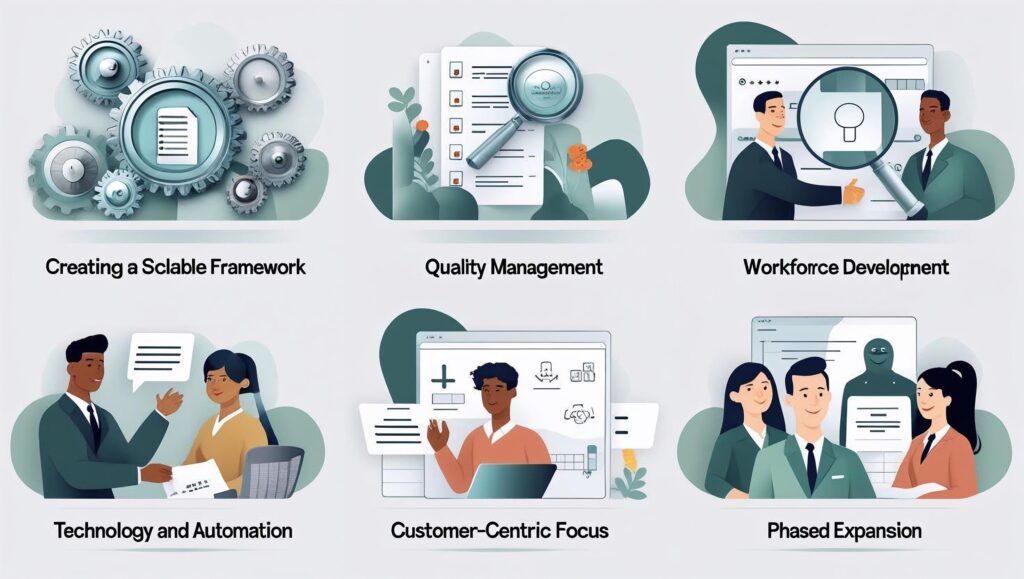
    1. Create a Scalable Framework:

    As with most things that grow successfully, it comes down to the right foundation for success! Your organization must have no plans for better steps, systems, tools, and processes to keep up with the growth of your organization and safely deliver your products/services without breaking! 

    • Invest in Scalable Technology: Use an ERP (Enterprise Resource Plan) system, CRM (Customer Relationship Manager), and automation tools and technologies to standardize workflows and lower chances of error, and manage large volumes of activity. 
    • Standardize Operational Processes: Create workflows and standard operational processes (SOPs) that result in consistency and quality results across all teams and locations. Create a centralized operations manual for employees, ensuring everyone performs the same process as your team grows.
    • Switch to a cloud-based solution: Adjust resources with ease—storage, processing power, and compute power are all on a recurring cost basis instead of significant spending up front on infrastructure. 

    Largify Solutions can assist with your implementation of scalable frameworks on the Scaling Solutions Page.

    2. Pay Attention to QMS (Quality Management Systems): 

    During periods of expansion, maintaining consistent quality requires an efficient Quality Management System (QMS). A QMS makes it easier to make sure that your company’s quality is tracked, measured, and assessed. 

    • Create a QMS: A well-organized QMS will provide sufficient procedures for meeting industry standards, obtaining customer feedback, and completing quality tasks. Your workforce will feel less burdened and have a shared background and context if you automate some of your QMS’s components.

     For further information on QMS implementation, visit   ISO Quality Management Standards.

    • Choose your KPIs (key performance indicators): Clear KPIs for quality issues, like service delivery times, defect rates, and customer satisfaction ratings, will provide quantitative information on what needs to be addressed before it damages your reputation.
    •  Establish a cycle of continuous improvement: a component of continuous improvement should come after growth. Establish a cycle of continuous improvement: a component of continuous improvement should come after growth. 

    You should anticipate that your teams will speak up and highlight areas for improvement both internally and externally, to provide higher quality.

    Largify Solutions can support your implementation of an effective QMS by reviewing our Quality Management Services.

    3. Buff Up Your Workforce:

    As your business grows, so will your business’s workforce. Growth will often necessitate growth in the workforce, but hiring quickly can lead to poor performance without specific training and alignment.

    • Culture and Capability: As you expand, you will need to hire quickly, but make sure you hire those who can deliver toward your company’s values and standards.
    • Training: Provide regular training programs for both new hires and current team members to ensure consistent quality. Consider on-the-job training opportunities via mentoring programs to allow new team members to learn from seasoned employees. 

    Think about using personal learning platforms such as Google Cloud Solutions to foster development among your employees.

    • Empowerment: Providing your workforce with the necessary tools, resources, and autonomy to succeed can increase the likelihood of ownership to deliver toward high standards.

    Largify Solutions can help shape your team development with customized workforce optimization techniques on our Workforce Development Page.

    4. Use Technology and Automation:

    Technology is the backbone for scaling without sacrificing quality. You can achieve more output and consistent outcomes, which will lead to improved quality using automation and data-informed insights. 

    • Automate repetitive tasks: Automation not only provides you with greater organizational efficiency but also gives employees the time to work on high-value tasks, resulting in fewer errors and improved processes like inventory management, procurement, delivery, and customer service. 
    • Apply Predictive Analytics: Data can predict future occurrences. With predictive analytics, you can enhance your forecasting of peak demand, troubleshooting, and decision-making based on efficiency and quality factors. 
    • Enhance Customer Experience: Businesses are better suited to provide improved customer experiences than before, largely due to technology. Thanks to AI chatbots, self-service apps, personalized-marketing apps, and other tech tools, your entire team can improve customer service while making it easier for customers.

    Businesses can experiment with Largify Solutions’ state-of-the-art automation opportunities in order to remain consistent in service delivery while enabling good quality assurance and customer satisfaction. 

    Your entire team can enhance customer service while simplifying the process for customers with the help of AI chatbots, self-service apps, personalized marketing apps, and other technological tools. 

    See how you can impact your customer experience with automation using Largify Solutions’ ERP.

    Companies can test out the cutting-edge automation options offered by Largify Solutions to maintain consistency in service delivery while facilitating high-quality assurance and client satisfaction.

    5. Maintain a Customer-Centric Focus:

    While scaling your business could pose the risk of losing sight of your customer, staying green-lighted on your customer’s satisfaction is essential for sustainable growth.

    • Get feedback and be sure to act on it: Find out where you are with your customers by asking them through customer surveys, customer reviews, and social media listening tools. Address customers’ concerns upfront and make changes to upgrade their experience. 
    • Personalize Interaction: Customers, as they scale, still expect to receive personalized service. They still want an intimate connection. While you will want to use a CRM tool to segment customers, you’ll want to get to know customers based on their preferences and overall shopping behavior.
    • Keep Customer Satisfaction Metrics: Keep your Net Promoter Scores (NPS), Customer Satisfaction (CSAT) scores, and other metrics close and personal, as these metrics will indicate whether you are living up to expectations.

    Largify Solutions aids businesses in building customer-centric strategies to support customer loyalty and satisfaction, even during startup growth periods.

    6. Utilize a Phased Expansion Model:

    Scaling doesn’t necessitate an overnight transformation. A phased growth model enables organizations to more effectively grow, fitting increased demand into their existing operational capacities without sacrificing quality.

    • Test First: Instead of doing one large scale-up, test your operation in a smaller context. This will identify potential problems and create an opportunity for iteration of the process before a full-scale operation.
    • Observe: As you progress through each growth phase, review your quality indicators. If you notice deterioration in any of the indicators, pause from stepping up the growth phase until corrective action is taken.
    • Scale in phases: Consider scaling operations in phases. Consider scaling one product line, facility, or service location at a time. This reduces overall risk and provides greater quality control.

    Largify Solutions has helped many businesses grow and scale internationally. And customer satisfaction was achieved 100 percent. 

    Conclusion:

    There is both opportunity and challenge in scaling your business. Growth certainly provides opportunities for new avenues of revenue, though growth does not come without consideration; you need to consider growth holistically and deliberately to preserve quality. 

    If you develop a scalable framework, you can scale sustainably and successfully, using the power of automation, building a strong workforce, and putting your customers at the center of your strategy.

    We are prepared to help you navigate the complexities of your business and ensure that businesses now and in the future can learn how to embrace growth without compromising the accomplishments that have made your business viable. 

    With the right mindset, tools, and support, growing your business doesn’t have to be synonymous with losing the qualities you are proud of.

    Why Work with Largify Solutions?

    At Largify Solutions, we know scaling is hard work, and it’s even harder to do it while remaining committed to a stakeholder value proposition that matters (quality). That’s how our team has helped organizations across diverse industries put in place strategies, systems, and support that help enable a sustainable scaling model without loss of exceptionalism. 

    Scalable technology solutions, quality management plans, human capital strategies, stakeholder-centered engagement plans, and a total commitment to providing consultation specifically for your unique business needs at multiple stages of your growth, from strategy to execution. 

    And, from an agreed-upon point of view, we can help you in your initial

    scaling or attempts to remember, remain, and reinvigorate.

    If you need to scale and maintain quality, book a free consultation now! We would be thrilled to help you grow smarter, faster, and stronger.

  • Top Digital Transformation Trends for Competitive Advantage in 2025

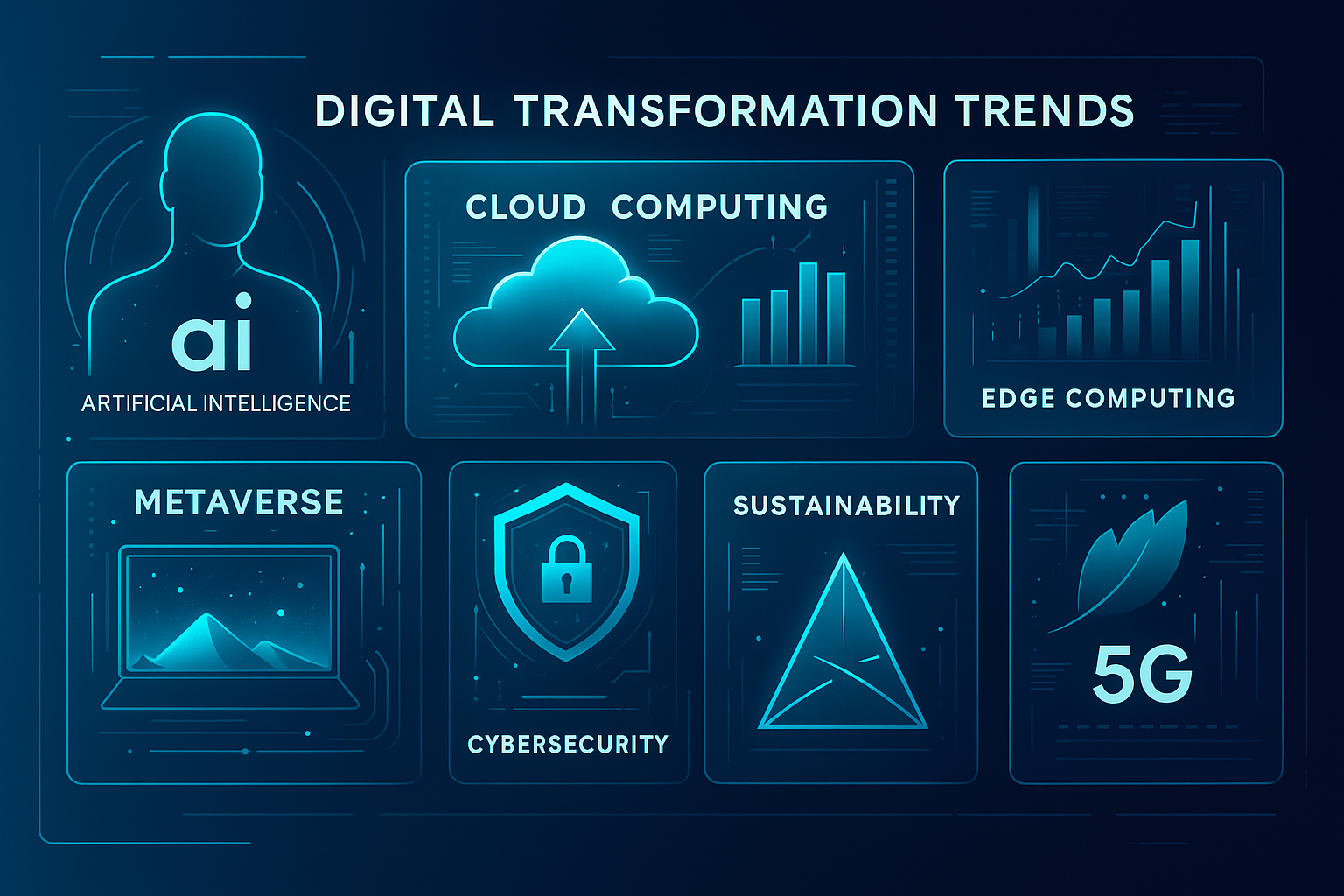
    Top Digital Transformation Trends for Competitive Advantage in 2025

    The corporate nature of the world before 2025, we are witnessing rapid subterranean changes in the digital landscape that are radically and methodically changing the way businesses communicate with us as consumers or with one another.

    These days, digital transformation is more than just a catchphrase; it is essential to a company’s survival. Businesses will be left behind in a competitive, technologically driven world if they do not adapt.

    As leaders in the ARENA headquarters for digital transformation, we at Largify Solutions assist businesses of all sizes in adjusting to change by offering them the innovation and capability they need to prosper in this new economy.

    1. AI-Powered Everything: 

    The discussion surrounding digital transformation is in the books (until 2025, or maybe longer). Artificial Intelligence (AI) is going to realize good behaviors around predictive analytics, chatbots for customer service, and that it is going to lay the groundwork to serve as a way of automation or personalization across industries. 

    Take full advantage of:

    • Hyper-Personalization: This is where AI has the ability to help individualize and customize experiences for each customer. Consider those platforms that know what you need before you need it. 
    • The Dawning of AI in Decision Making: Businesses started looking toward and getting help for fast decisions powered through insights provided by an AI service, gathering fuel (data) in the moment to preserve company resources, drag on performance, or growth.

     Largify Solutions delivers the missing link for companies to successfully plug in AI tools to their organizational mix, kick change into gear, and simply get productive.

    2. The Advent of Vertical Clouds:

    Cloud computing was deployed as one of the key items in the roadmap for digital transformation a few years ago in organizations. We are already witnessing industry-based cloud platforms being born, such as in health, manufacturing, retail, or finance, but eventually a start-up adept at capturing an entire sector will take advantage of the economies of scale. 

    • Vertical Clouds: Business-specific solutions crafted with customized tools, AI services & compliance processes. Such as a health cloud with telemedicine built right in and officially HIPAA compliant. 
    • More hybrid cloud: Hybrid clouds will continue to grow only as corporations pursue the ultimate middle ground between scalability, security, and flexibility.

     Largify Solutions has a proven track record of acquiring the most popular cloud-based solutions—hybrid or industry-specific—to address integration and scalability requirements across a vast cross-section of sectors.

    3. Edge Computing Takes Center Stage: 

    With a surge of IoT devices and the need for real-time computing, edge computing will take the spotlight in 2025. By processing true data at or near its source (and not in a data center), edge computing boasts faster response time and lower latency. 

    • IoT applications: Both in manufacturing and smart cities, will benefit from improved performance through edge computing across many devices. 
    • Lower latency: autonomous driving, healthcare, finance – these are examples of industries that would benefit from processing data from the IoT in real-time for improved safety and efficiency. 

    At Largify Solutions, we help companies utilize edge computing to improve efficiency and responsiveness. For companies needing real-time data, edge computing is ideal.

    4.  Cybersecurity as a Core Business Strategy:

    The business impact of digitalization is accelerating at the same pace as cyber threats. By 2025, cybersecurity will no longer be an IT department response, but rather become a core business strategy. AI can lead to threats being detected and removed in real time. Threats to your organization and AI will be detected and removed in real-time. 

    • Zero Trust Architecture Will Gain Significant Usage: Businesses will shift focus to a stronger use of “zero trust” architecture, in saying the “enemy” is everywhere in your organization, understand what is trusted or unknown on your network, and shift the network to a safer attack surface. 
    • Complying with Data Privacy Regulations: Organizations will have an even larger focus on compliance with data privacy regulations, as organizations will have only high-security platforms. Largify Solutions has customized solutions that will aid in protecting your organization in the digital ecosystem and keeping you compliant with privacy regulations.

    5. The Metaverse: Beyond Virtual Reality:

    The metaverse is an element of our collective imagination; however, it is vital in becoming a business tool. By 2025, the virtual universe of connected digital spaces will transform how we work, shop, and play. 

    • Virtual Workspaces: Companies will be using metaverse solutions to create existences that model collaboratively immersive spaces, removing the need for traditional video conferencing altogether. 
    • Virtual Commerce: Retailers will be creating a virtual shopping experience that will allow consumers to experience ‘try before you buy’-virtually of course. Digital Twins: Companies will use digital twins -the virtual representation of a real-world object or system- to simulate scenarios, enhance processes, and make better-informed decisions. 

    Largify Solutions is one of the first companies to provide metaverse technologies and services, helping companies understand the possibilities of this technology, from virtual collaboration to digital twins.

    6. 5G and Beyond :

    5G networks are already starting to change connectivity, but between 2020 and 2025, we will see what 5G – and even 6G technologies – can do. In the next 3 to 5 years, we expect the following changes: 

    • More Connectivity: Faster and more secure internet will shift the way we do everything, from working remotely (home-sick or while travelling) to making cities smarter to improving both virtual reality and augmented reality.
    •  Expansion of IoT: More 5G means more IoT devices that can connect and communicate easier will spur invention and creativity in agriculture, healthcare, and logistics. 
    • 6G Horizons: 6G is still “in its crib,” but it will bring new horizons in data speeds and capacity, which will lead to new horizons for edge computing, AI, and AR/VR.

     Largify Solutions partners with businesses on leveraging next-generation connectivity for their business is braced for what 5G (and beyond) will bring.

    7. Sustainability Via Technology: 

    Today, sustainability is no longer a nice-to-have, but a business imperative. Digitalization in 2025 will increasingly go hand-in-hand with environmental, social, and governance (ESG) objectives. 

    • Green Technology: Businesses will adopt technologies that can lower carbon emissions – for example, a low-carbon data center, or utilizing artificial intelligence for energy management. 
    • Circular Economy Models: Businesses will use digital solutions to adopt circular economy models- for example, product life tracking or waste reduction initiatives. Sustainable Supply Chains- The use of AI and Blockchain will help companies reduce inefficient and wasteful products, which will support transparency and ethical sourcing.

     At Largify Solutions, sustainability is our number one priority, with us providing solutions that assist businesses to meet their ESG goals on a cost-neutral and sustainable basis.

    Conclusion:

    As the digital transformation trends show in 2025, it will be an interesting yet challenging future for businesses. Companies that proactively embark on these journeys will not only keep pace with their competitors but also create long-term value for their employees, customers, and stakeholders. 

    Whether you’re facing generative AI integration, cloud-enabling solutions, cybersecurity challenges, or sustainability objectives, Largify Solutions recognizes the importance of your journey and wants to help you develop and foster a future-ready organization.

    Why Choose Largify Solutions?

    Largify Solutions knows that digital transformation can be challenging. That’s why we offer consultative services and consulting solutions to help companies stay competitive in the digital world. 

    Our services range from AI implementations to cloud computing, cybersecurity, and sustainable solutions. Our goal is to help companies in every stage of their digital transformation.

    We want businesses of all sizes to overcome the obstacles of innovating, adapting, and succeeding in the new economy. We have the tools at our disposal to deliver excellence and look forward to our clients entrusting us with their digital transformation journeys. Are you ready for 2025? Let’s develop your digital transformation plan today! 

    Contact us now for a free consultation!

  • Scale Your Business with Largify Solutions’ ERP: A Complete Guide

    Scale Your Business with Largify Solutions’ ERP: A Complete Guide

    The era we are currently living in is a time of fast-paced and competitive business environments. And without the proper management and market structure everything will become chaotic. This is why organizations need tools that would centralize, enhance, and automate your operations so that they would run smoothly and reduce costs.

    And ERP (Enterprise Resource Process) is the perfect tool built for this. Largify Solutions’ ERP system is built to help businesses scale with precision and sustainability. Here’s a guide on how with the help of Largify Solutions’ ERP you can scale your business much faster, easier and effectively.

    What is ERP, and Why Do You Need It?

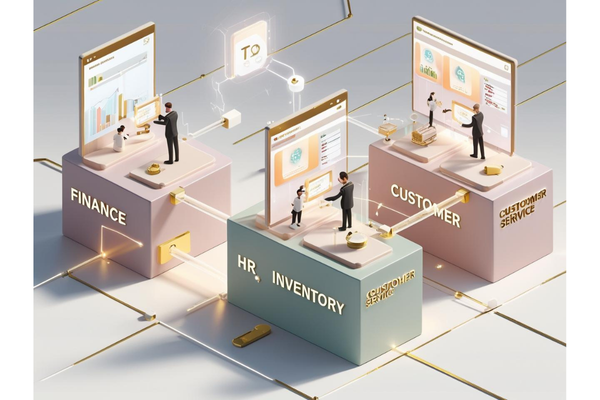
    Generally, ERP (Enterprise Resource Process) software automates back-office processes for finance, sales, procurement, inventory management, and manufacturing. Organizations can gain a real-time view across their operations by using one central database. The following illustration depicts business functions supported by an ERP system.

    An effective ERP system also allows an organization to analyze transactional data, resulting in more streamlined processes and greater efficiency.

    Why Tailored ERP Matters More Than Off‑the‑Shelf 

    Many firms, when growing, struggle with manual work, cluttered data and tools that would slow them down in their work. Businesses would usually be in need of specific features and that becomes impossible with premade ERP.

    Therefore, Largify Solutions creates ERP that would work around your workflow. And they keep transparent communication with the clients to ensure 100% perfection,

    Why Largify Solutions’ ERP is Built for Scalability

    Largify Solutions offer expert level Microsoft Dynamic 365 ERP solutions that simplify business operations. Here’s what they provide: – 

    1. Workflow Optimization: 

    They simplify complex operations and improve their efficiency.

    1. Data-Driven Insights:

    Advanced analytics are used for making well-informed business choices.

    1. Cross-Functional Integration:

    Establishing smooth departmental connectivity for coordinated activities.

    1. Scalable Solutions:

    With their ERP they help you adapt with the changing business trends.

    1. Custom Implementation:

    Customized Dynamics 365 to align with your business’ operational needs.

    1. Cloud-Based & Accessible:

    You can use your ERP system even on your phone or from your office, house or anywhere! All without any security risks.

    1. Industry-Specific Modules:

    Largify Solutions offer tailored ERP for: –

    • Retail & eCommerce.
    • Manufacturing & Production.
    • Education.
    • Healthcare.
    • Wholesale & Distribution.

    How Largify Designs ERP for Business Growth

    1. Discovery and strategy: 

    Conversation plays a key role. Largify would map the pain points, constraints, and future goals, then they would present a suitable module for you.

    1. Fractional CTO and ownership:

    Largify Solutions gives you a part-time tech expert that helps you make smarter choices.

    1. Modular architecture:

    Instead of building an over-engineered system, Largify Solutions uses the MVP strategy to build modular ERP components.

    1. Selected Tech Stack:

    They use modern frameworks like Express.js, Django, React, Node.js with databases like MySQL or MongoDB so that the ERP is easy to evolve.

    1. Integration & Automation:

    Largify Solutions connects the ERP with your platform, payment gateways, CRM tools, HR systems and warehouses to keep everything synchronized.

    How Largify’s ERP Scales Your Business

    1. ERP Inventory Management

    No more stress over “where’s that item?”, “forgot to stockup”, “why do we have so many of these units?”. Largify Solutions’ inventory module helps with just that! Some aspects are: –

    • Visibility of stocks in real time.
    • Alerts for auto-restocking.
    • Batch and expiration monitoring.
    • Control at warehouse level.
    1. Finance That’s Fully Under Control

    Largify’s ERP has a great feature set, which is that it simplifies your financial management. It offers:

    • Automated recording, organizing and keeping track of financial transactions.
    • Insight on cashflow.
    • Budgeting tools.
    • Cross-checking bank transactions

    And in addition to all this, you will have current financial info to support your strategic decisions.

    1. HR That Empowers, Not Overwhelms

    As your business is scaling, managing your employees can become quite difficult. Largify Solutions’ ERP includes HR and talent management tools which does an excellent job at automating and integrating your accounting processes which include: 

    • Payroll
    • Tax reporting
    • Accounts payable
    • Invoicing 
    • Saved time 
    • Reduced errors 
    • Employee’s record
    • Tracking attendance 
    • Performance records

    With this you are able to put your focus on paperwork, and not people.

    1. ERP with CRM integration

    Scaling doesn’t just mean bringing in new customers, it’s also about maintaining the current ones. And doing that is easy since Largify’s team helps your team with:

    • Tracking customer’s buying process.
    • Automated customer reminders and messages.
    • Access to customer purchase history.

    And the best part is, all this data is arranged in your ERP and not just scattered everywhere.

    1. Data-Driven Decisions with Advanced Reporting

    Largify’s ERP provides customizable records and dashboard which allows you to view:

    • Profit margins
    • Low performing products
    • Best selling products
    • Backup Funds

    What Sets Largify Solutions Apart from Others

    Many ERP systems can get too complex or cluttered, but Largify’s ERP is easy, clean and professional. Here are some uncommon yet essential features:

    • Local business with global scaling.
    • Quick to work, no long periods of training required.
    • Affordability with enterprise grade features.

    Security and Compliance 

    Scaling your business means more customers, more sales, and more data to manage which leads us to major security risks. But thankfully Largify Solutions always comes prepared:

    • Role-based access control
    • Data encryption
    • Audit trails
    • Compliant with Pakistan’s FBR and SECP requirements

    While you are scaling, Largify is protecting.

    Human-Focused Technology

    People fear change, doubting where the new technology is safe or not. Largify Solutions understands this and they build with people in mind: 

    • Training or staff before anything is built.
    • Custom dashboards are created so that it is easy to navigate through all the departments.
    • Feedback before launching and finalizing the project.
    • User-first UI/UX to reduce training friction and time.

    This ensures that people don’t feel forced regarding ERP. But rather that it is there to help the staff and management. 

    Conclusion

    With the right decisions and guidance, scaling becomes easier. ERP systems built by Largify are essential for that. They convert disorganized data into integrated workflows, manual problems into automation and uncertainty into certainty. 

    Doesn’t matter if you are a SME or a large enterprise, a tailored ERP will certainly bring speed, growth and efficiency to work.

    Additionally, Largify’s way of handling projects and clear communication always gives satisfactory results.

    Scale your business today!

    If you feel like you are being left behind compared to your competitors and managing is becoming harder for you, then you just need to take the next step! Largify Solutions helps you scale confidently.

    Book a free consultation now!

  • 10 Ways to Boost Your Product Visibility on Google

    10 Ways to Boost Your Product Visibility on Google

    It will be difficult to raise your product’s Google visibility, but you can use strategies and ideas to draw in more customers and traffic. You can actually increase the reach of your product. 

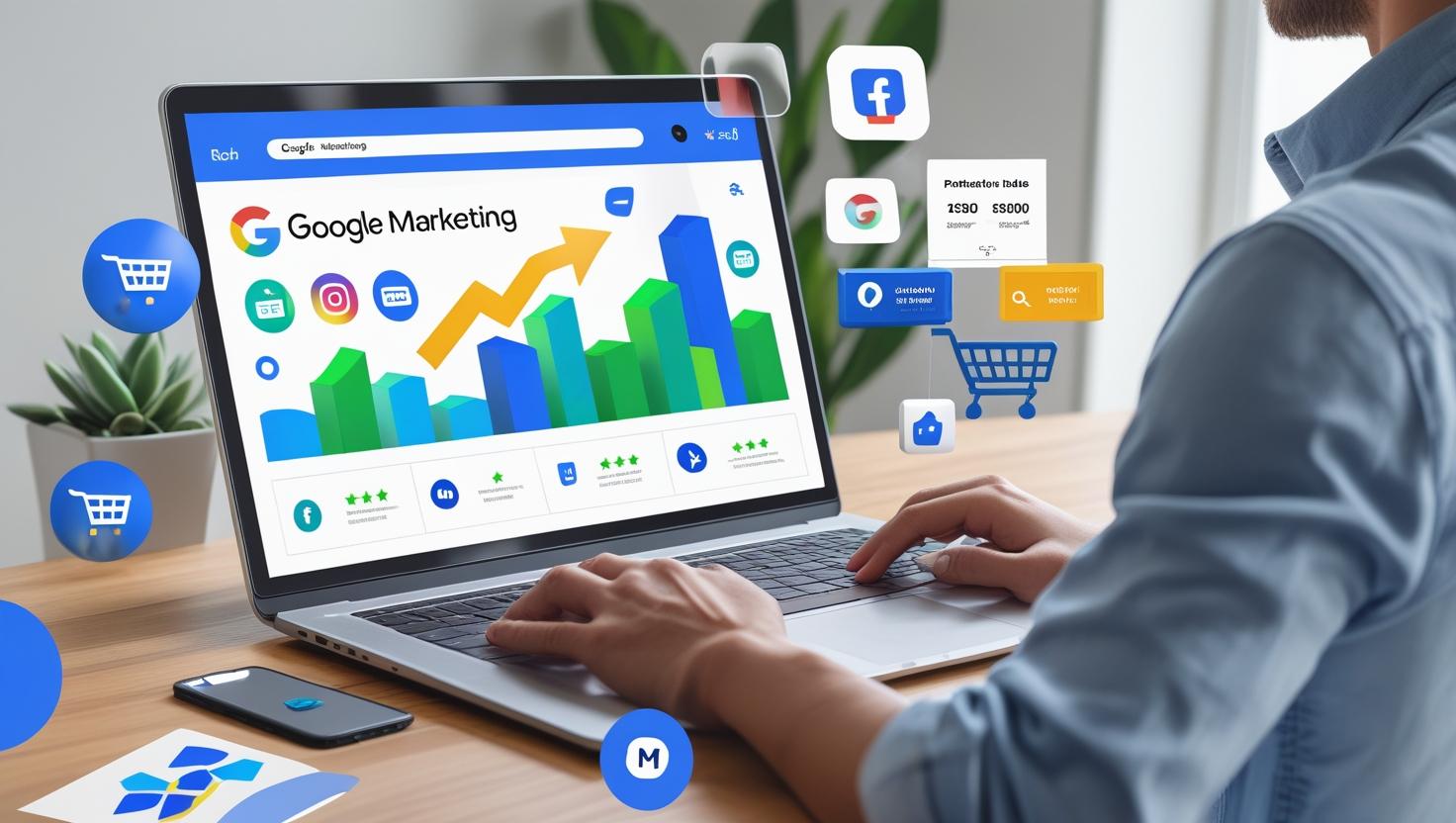
    Sharing product screenshots or images, linking to social media sites like Facebook, Instagram, Twitter, and many more, and making adjustments for SEO trends and changes are all ways to increase social media engagement. Google Ads can also be used for influencer partnerships, advertising, customer reviews, acquisition, and the publication of high-quality content. Largify Solutions can help you enhance Google visibility.

    Let’s look at doable strategies to improve the Google visibility of your product.

    1. Optimize Your Product Pages:

              Your internet stores are your product pages. Ensure they have optimized the keywords prospective buyers use in their searches. Add crisp, excellent photos and thorough explanations emphasizing the special advantages of your products. You can create attention-grabbing product pages that turn visitors into buyers. Largify Solutions can help you in creating and optimizing your product page.

    2. Use Google My Business:

              Google My Business (GMB) is necessary if your business has a physical location. You may control your company’s Google Maps listing and search results using this free tool. Provide all required information, such as your address, phone number, and hours of operation. Your local visibility can be significantly increased with a properly configured GMB profile. Largify Solutions can assist in creating and refining your GMB profile that can draw in local clients. 

    3. Engage on Social Media:

               Social media sites are excellent resources for raising the visibility of your goods. Concentrate on producing visually appealing and captivating content for social media sites like Facebook, Pinterest, and Instagram.

    Regularly post updates that feature your products in authentic environments or through user-generated content. Use polls, live videos, and stories to engage your audience and create a brand community. Make the most of relevant hashtags as well to make it easier for prospective buyers to find your goods.

    To reach a larger audience, work with influencers who share your values. To build solid client relationships, be consistent in publishing high-quality content and responding to messages and comments right away, and Largify can help you with this.

    4. Create Useful Content:

              Rich content is essential for raising your search engine rankings and drawing organic traffic. Concentrate on creating excellent blog entries, manuals, and videos that offer insightful details about your goods. By conducting in-depth keyword research, you can find out what terms your target audience uses to search for your content. Then, organically incorporate those terms into your writing.

    Regularly adding new, relevant content to your blog keeps readers interested and search engines happy. To increase the engagement and shareability of your content, include multimedia components such as pictures, infographics, and videos.

    Largify Solutions can help you increase your site’s visibility and attract a constant flow of interested visitors by regularly producing worthwhile, keyword-optimized content.

    5. Gather Customer Reviews:

              Positive evaluations significantly influence purchase decisions. Urge your pleased clients to post reviews on Google and your website. Reacting promptly to favourable and unfavourable reviews builds your reputation. It demonstrates that you respect client input by creating a review request plan to collect testimonials to improve your internet reputation and attract new clients. With Largify Solutions, you can request a review strategy, and it helps you improve your reputation and attract new clients.

    6. Use Google Ads:

                Woop ads can help you gain huge exposure and help your target customers land on their Tribes store. Platforms such as Google Ads, Facebook Ads, and Instagram Ads enable you to target individuals based on interests, behaviours, and search patterns.

    Begin by determining your goals for the campaign and how much you’d like to spend. Design stunning images and powerful ad copy that make people want to click. One way to find out what types of ads will resonate the most with your audience is by A/B testing, so don’t be afraid to test out a few different things.

    This is why it is also vital to constantly track the most important numbers, such as conversion rates and click-through rates (CTR). With the assistance of Largify Solutions, by making ongoing campaign adjustments in response to this performance data, you’ll generate a more effective return on investment (ROI) and ensure your ads are relevant to your user base.

    7. Implement Structured Data:

              Structured data improves how your products appear in search results by giving search engines a better understanding of your content. Schematic markup may enhance your listings by adding details about availability, pricing, and reviews. This can increase click-through rates and make your products look better in search results. When it comes to Largify, it can assist you in the technical aspects of adding structured data to your product pages.

    8. Monitor Your Analytics:

              Making wise judgments requires knowing how well your website performs. Track crucial metrics like traffic, conversion rates, and user activity using Google Analytics. You can use this data to determine what is effective and requires modification. You can improve the outcomes of your strategy by routinely analyzing your analytics. Largify Solutions supports you in providing analytics support to assist you in efficiently interpreting your data and making data-driven decisions.

    9. Collaborate with Influencers:

                Influencer marketing can be a game-changer for your product. To start, find influencers who have values that align with your brand and whose fans match your ideal customer profile. Stop going for the one-off deal and instead look to the long term and build relationships.

    Authentic endorsements by popular personalities can significantly boost the product’s exposure and credibility. Offer influencers free products or other incentives in return for their reviews and testimonials of your product. While subtly shining a spotlight on why your products are a cut above the rest, ensure the content they create aligns with their regular aesthetic.

    Keep track of how those partnerships performed, perfect your next tactics, and never stop getting the best of influencer marketing.

    10. Stay Updated on SEO Trends:

                    You need to update the SEO adjustments to make your product more visible. Ensure your product title and description contain relevant, mostly trending keywords first. To rank the content higher, make it flow naturally without using awkward phrases.

    Understanding what a customer looks for is the first step in using keywords to highlight your product.

    You should also produce high-quality or valuable content about your product to increase traffic. Pay attention to the text and description; these often-overlooked components will significantly raise your Google search engine ranking.

    Conclusion:

    Getting your product seen on Google is a multi-pronged process. You can viably boost your online presence by optimizing your listings, taking advantage of Google My Business, shopping ads, good content, and engaging in social media. Pay close attention to your performance and keep yourself informed with the latest SEO trends for sustainability. 

    Apply these methods and see an increase in the visibility of your product. Largify Solutions has helped many businesses and Largify Solutions plays an important role in it as well.

  • 5 Best Security Practices for Your Online Store

    5 Best Security Practices for Your Online Store

    An online store is more than just a convenience for people– in today’s digital marketplace, it is the core of many businesses. Many big brands function online rather than having a physical store. And those that do have physical stores also have an online store for the convenience of those that can’t shop physically.

    But as there was a rise in eCommerce, a 71% rise in cybercrimes were also recorded. This is why online retailers need to take proactive steps in protecting not only their site but also their customers’ data, since this can result in not only sales and revenue loss but also a stain to their brand and loss of customer’s trust in the company.

    So, how can you keep your online store and your data safe and secure?

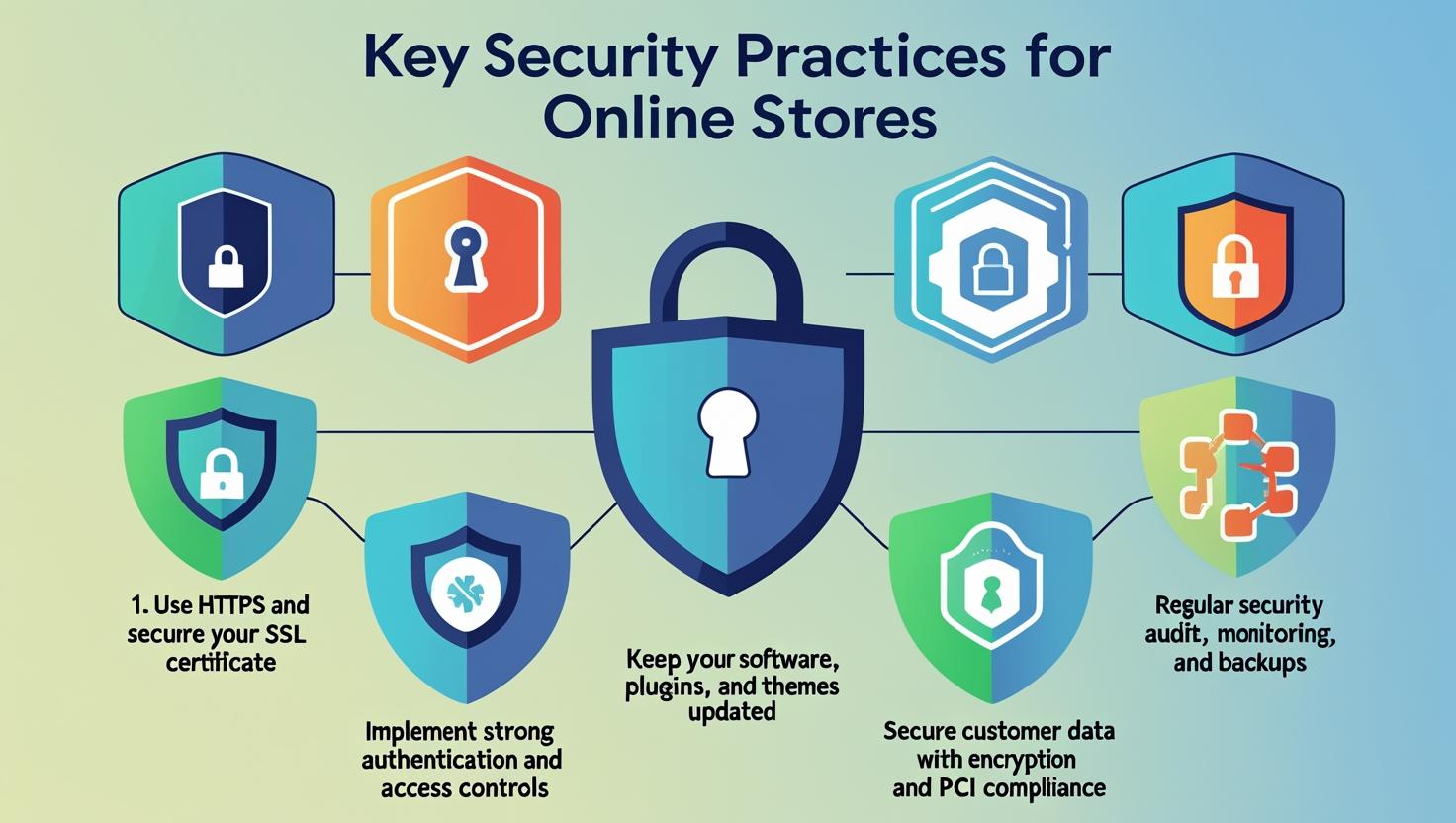
    Here are the top 5 security tips that every eCommerce store should implement– whether they are just preparing their launch or scaling their business to thousands of customers.

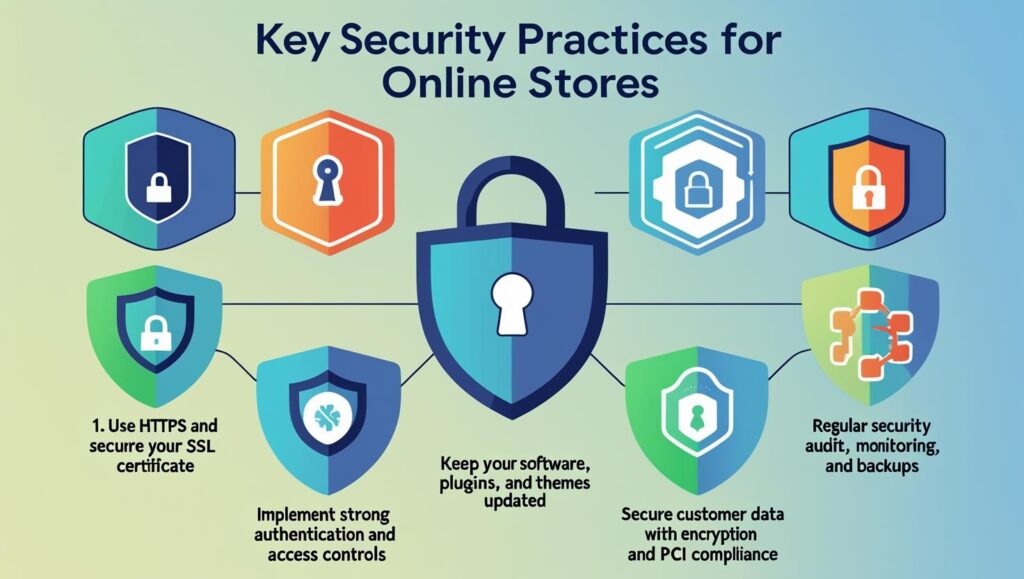
    1. Use HTTPS and Secure Your SSL Certificate

    Imagine you are shopping online and just as you’re about to enter your credit card details on the website, you notice the browser showing “Not secure”, would you still trust them? Of course not! Many customers will not be entering their important information just like that and rightfully so.

    That’s where HTTPS (HyperText Transfer Protocol Secure) comes into play. HTTPS will encrypt all the data that is being exchanged between the customer’s browser and the website, making it harder for attackers to steal sensitive information.

    The SSL (Secure Socket Layer) certificate encrypts data both in store and in transit and authenticates the user’s identity. Here is how you can implement an SSL Certificate:

    • Obtain an SSL certificate from a trustworthy certificate authority, such as Comodo or Let’s Encrypt.
    • Make sure that HTTPS is used to serve all of your store’s pages, not only the checkout page.
    • To enforce HTTPS connections, use HTTP Strict Transport Security (HSTS).

    Many big eCommerce companies like Shopify, WooCommerce and BigCommerce would include SSL Certificates by default to ensure that it is always active.

    2. Keep Your Software, Plugins and Themes Updated

    Keeping your software and plugins updated may sound like an obvious thing to do but believe it or not many do not implement this step. It is best to know that outdated systems are the leading cause of cyberattacks.

    Hackers constantly search websites for weaknesses in third-party extensions, themes, CMS platforms (such as WordPress), and out-of-date plugins. Especially when you run online eCommerce sites like Shopify, WooCommerce and Wix, unpatched plugins can be a major cause of risk for your business.

    Best practices would be: – 

    • When feasible, enable automated updates; otherwise, schedule manual updates on a regular basis.
    • Make use of reliable themes and plugins from developers you can trust and who have a history of frequent updates.
    • Unused extensions and plugins should be deleted. They pose a needless risk.

    Keep an eye out for any updates on the platform’s dashboard and make sure to update your site at least once a week.

    And if you are using a custom CMS or a self-hosted platform, ensure that your development team is always aware of the latest security fixes.

    3. Implement Strong Authentication and Access Controls

    Using weak passwords and shared logins is basically like giving an open invitation to cyber-attackers. Strong and secure authentication is a must for both you and your customer.

    Here are the following steps on what to do: –

    • All staff and admin accounts should have strong passwords that combine capital and lowercase letters, digits, and symbols.
    • For administrator access, use two-factor authentication (2FA). This easy procedure provides an additional degree of security.
    • Give employees access to only the areas of the store they require by using role-based access.

    Another way to consider this is that customer billing information is not required or necessary for your marketing staff to have access to. Segment access appropriately.

    4. Secure Customer Data with Encryption and PCI Compliance

    If your eCommerce platform works in such a way that you have to store, handle or process debit card, credit card or any type of payment information, then compliance with PCI DSS (Payment Card Industry Data Security Standard) is non-negotiable.

    PCI Compliance rules must be followed as they protect the customer’s credit card details. Some of those essential steps are: –

    • Don’t keep private credit card information on your servers.
    • Make use of reputable payment gateways that manage card data and guarantee PCI compliance, such as Square, PayPal, or Stripe.
    • Use AES-256 or another robust encryption standard to encrypt all customer data that is stored.

    Additionally, be open and honest about your data privacy guidelines. Consumers value knowing how their information is handled and safeguarded.

    PCI Compliance is automatically handled by platforms like Shopify and Wix. But if you are using a custom setup then it is your responsibility to ensure the PCI Compliance. To maintain the security and lower the danger of data breaches of your company, make sure that your payment systems and procedures adhere to these guidelines.

    5. Regular Security Audits, Monitoring, and Backups

    Your store’s digital doors may have the toughest locks, but that doesn’t mean you can rest easy. Similar to how you wouldn’t leave a physical store unattended at night, your online store also requires regular inspections and early warning systems in order to remain secure.

    Here is what to implement: –

    • To find vulnerabilities, do routine security audits.
    • To check for malware, open ports, and out-of-date components, use automated programs or consult professionals.
    • Install real-time monitoring software (such as SiteLock, Cloudflare, or Sucuri) to identify questionable activity.
    • Make regular backups of the databases and files in your store. Test recovery from time to time and store them elsewhere or in the cloud.

    There is no “set it and forget it” approach to security. You can create a robust eCommerce platform that can withstand cyberattacks and flourish in a trusting environment by conducting frequent audits, maintaining continuous monitoring, testing backups, and tracking activity.

    Conclusion! 

    Security is more like an investment rather than a cost in this case. If customers know and are ensured that their personal information is safe, they will surely be able to shop more often with peace of mind. They may also recommend your brand to many other people and so on.

    There is no compromise on security whether you own a small local shop or an international eCommerce business. This is essential if you want to grow your business and ensure customer satisfaction.

    Need Help with Securing Your Online Store?

    It is confusing for non-technical people to implement these security protocols to their platforms. Therefore, companies like Largify Solutions, a leading Pakistani tech firm, provide cybersecurity and end-to-end eCommerce development services. 

    They assist in making sure your store is secure and compliant with everything from penetration testing to custom firewalls. You can be in a far-off foreign country, and Largify Solutions will still present you with satisfactory results.

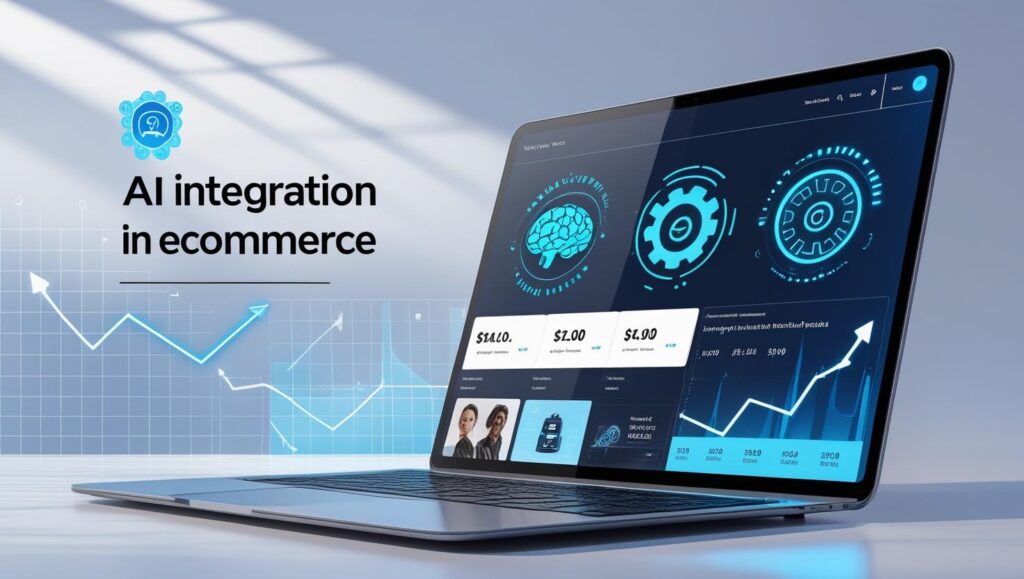
  • Integrating AI in eCommerce: Opportunities and Challenges

    Integrating AI in eCommerce: Opportunities and Challenges

    E-commerce has helped businesses by helping them reach global consumers with just a single click. The introduction of AI in e-commerce has completely changed the way online businesses operate by leveling up efficiency, innovation, and customer experience.  

    AI has enormous potential for everything from inventory management to suggesting personalized products. But these potentials also bring with them practical difficulties that companies need to handle carefully.

    In this article, we will explore the enormous role of AI in eCommerce, highlighting the opportunities and challenges present and faced.

    Opportunities: AI Revolution in eCommerce

    1. Hyper-Personalized Shopping Experience 

    Competition is high, and customer demand has increased. Customers now demand more than just a transaction and exchange– they want a carefully organized and managed experience. 

    AI provides just that by tracking and analysing user behaviour, their purchase history, demographics, and even real-time behaviour to personalize product recommendations.

    Example: –

        A customer who just bought travel accessories will be recommended travel-sized essentials. Platforms like Amazon and Noon excel at this.

    1. Smarter Search and Voice Commerce

    AI has replaced the endless scroll in the search for a specific product with natural language search and image-based search. Customers can now even use voice assistants like Alexa or Google Assistant to help them find what they are looking for!

    Example: –

        The customer takes a reference photo of a shirt they’re looking for and uses AI, which leads them to stores with similar or exact style and colour.

    1. 24/7 AI Chatbots for Customer Support

    AI-powered chatbots can immediately respond to thousands of consumer inquiries, including purchase monitoring and return processing. 

    They reduce human workload, have faster response times, and can work 24/7 without getting tired.

    Example: –

         AI-powered chatbots are used by big brands like H&M to assist consumers with queries, purchases, and searches.

    Some chatbots, like Tidio or Drift, even improve their responses by learning from past conversations.

    1. Predictive Analytics and Dynamic Pricing

    AI can predict future trends by analysing current trends and demands of consumers, like what will be in demand next, or which regions show growth potential.

    In addition to this, businesses can now automatically modify prices in response to demand, seasonality, inventory levels, rival pricing, and consumer segments, all thanks to AI.

    Example: – 

        Many retail stores like Walmart, Target, and eBay would use AI to adjust prices based on market trends, competitive pricing, and demand.

    1. Inventory and Supply Chain Optimization

    AI is beneficial in keeping track of inventory needs and restocking. It also helps to detect any disruption in the supply chain early. Financially, this is a great method as it prevents over- or understocking and overall improves efficiency. 

    Example: –

        AI is used by platforms such as ClearMetal and Llamasoft to provide real-time insights into logistics and inventory management.

    1. Fraud Detection and Cybersecurity

    Detecting and preventing fraud is crucial for an e-commerce business. Machine learning models help with just that by analyzing transaction data to spot unusual behaviour, like mismatched locations and several failed transactions.

    Along with this, it can also identify fake reviews and flag suspicious accounts.

    Challenges: Real Hurdles in AI Adoption

    Though the benefits of AI in eCommerce are a lot. Businesses still go through many challenges while integrating AI into their work.

    1. Data Privacy and Ethical Concerns

    To get any work done, AI requires data. And AI collecting, storing, and analysing user data raises serious concerns since any mistake while handling the data can lead to bad consequences. 

    Due to this, the user may sue or take legal action against the company, which could severely damage the company’s reputation, affecting their sales.

    Important regulations to consider are: – 

    • GDPR (Europe)
    • CCPA (California)
    • PECA (Pakistan)

    It is also very important that you give insight to the user about how and where their personal information will be used.

    1. High Development and Maintenance Costs

    Integrating AI can be very expensive, especially for new or small businesses with a limited financial budget and limited resources.

    AI implementations require: –

    • AI professional
    • Large datasets 
    • Advanced infrastructures
    • Constant monitoring and updates 
    • Implementing AI in an already existing system 

    The cost of these requirements can be very substantial for a business, especially for a startup.

    Solution: –

         Make use of plug-and-play AI solutions like Google Cloud AI, Shopify’s AI integrations, or ready-made ML APIs that need little configuration.

    1. Integration with Older Systems

    Older and outdated sites and systems were not designed with AI in mind. And so, integrating AI into these systems can raise compatibility issues during the adoption process, creating friction.

    Solution: – 

    Start with modular AI integrations that complement your current tech stack, such as recommendation engines or chatbots.

    1. Over-Automation and Loss of Human Touch

    While AI and automation may save money, time, and human labour, users still prefer humans over AI when it comes to complaints and suggestions, since AI can come off as cold and rather direct.

    Humans can easily get overstimulated and stressed, and personal interaction plays a crucial role in handling such situations because AI is not aware of how human emotions work. So, for a smooth-running business, finding and adapting the right balance between both is important.

    Real World Examples: How AI is Being Used in E-commerce

    • Alibaba automatically creates thousands of product descriptions per second using an AI copywriting tool.
    • eBay uses AI for visual search, fraud detection, and image recognition.
    • Shopify gives retailers more power with features like AI-driven inventory management, smart retargeting, and predictive analytics.
    • AI is used by Daraz (Pakistan) for user interaction, logistical tracking, and product recommendations.

    Putting aside big companies, even smaller startups are becoming creative with AI integration. 

    Example: – 

        Savyour, a Pakistani eCommerce platform, to improve customer retention, is investigating AI-powered reward schemes and customization tools.

    Future AI Trends for eCommerce

    1. AI-Generated Content

    AI tools like ChatGPT, Jasper AI, and Copy.ai will be commonly used to generate product descriptions and promotional emails, along with personalized content.

    1. AR and AI Integration

    Customers can “try before they buy” with AR thanks to AI, which also helps to customize the UX experience. Imagine interior design visualizers or virtual changing rooms driven by AI, which would make the shopping experience more fun and effortless.

    1. Voice Commerce Growth

    The use of AI assistants for voice search and purchasing will increase dramatically as smart speakers become more prevalent in homes. e.g Alexa.

    How Largify Solutions Integrates AI into eCommerce

    Largify Solutions, a tech company, has helped many businesses and even startups with the integration of AI. 

    Some of those roles include: – 

    • Custom AI-Powered Recommendation Engines
    • Predictive Analytics & Dynamic Pricing Tools
    • AI Chatbots & Customer Support Automation
    • Seamless Integration with Legacy Systems

    Conclusion 

    AI is not a trend that will come and go. As time passes by, the use of AI has only increased. It has become the future of eCommerce, and businesses that implement AI in their systems will be able to effortlessly perform streamlined operations and stay ahead in any competition.

    However, just like it is said, “With great power comes great responsibility”, meaning that AI should be used with care. Any adoption strategy should prioritize data security, ethical considerations, and careful human-AI cooperation. 

    Don’t Know Where to Start?

    It can be confusing for a person who is not familiar with tech stuff as to where they should start with AI integration. 

    But worry not! Here is a simple roadmap on how to get started: –

    • Start with chatbots, or automated customer assistance.
    • Introduce intelligent search and recommendations.
    • Integrate dynamic pricing and predictive analytics gradually.
    • Examine ethical usage and privacy compliance.

    Even with this roadmap, it can be hard to actually implement AI in your e-commerce business. For this, an easy and best solution is to reach out to a tech company that will help and guide you through these procedures.

    A perfect example would be Largify Solutions. They have helped many e-commerce businesses and continue to do so in the upcoming years. 

    Many clients have shown their satisfaction in working with them because they leave no communication gaps and thoroughly discuss every matter with their clients. For them, building trust is also a priority, along with delivering the best results.

  • The BEST 5 ERP TRENDS IN 2025

    The BEST 5 ERP TRENDS IN 2025

    Enterprise Resource Planning (ERP) systems are now a crucial component of how modern businesses operate. ERP helps organizations streamline their core business processes, including finance, HR, manufacturing, sales, and supply chain, and provides a single source of truth.

    ERP system with AI and cloud integration in 2025

    Since 2022, the ERP market has seen an increase of 8%. And studies show that 1.4 million companies will spend $183 billion on ERP systems. This figure makes up a whopping 17.9% of total IT software spend, and 5% of overall IT spending. This is no surprise given that businesses rely a whole lot on ERP as it eliminates unnecessary processes and automates tedious tasks, which cuts down on costs. 

    In this article, we will discuss the top 5 ERP trends defining 2025.

    1. AI-Driven ERP for Faster, Smarter Decision-Making

    Al and ML aren’t just a trendy term, nor does it come in a ‘maybe’ option–it is essential. The ERP platforms are converting into an intelligent digital system, giving real-time information and the ability to make predictions that speed up the process of making decisions.

    Key Benefits: 
    • Predictive forecasting: AI models are used to predict maintenance schedules, inventory needs, and sales.
    • Virtual Assistants: Chatbots speed up processes, make navigation easier, and provide answers to customer questions.
    • Anomaly detection: AI identifies any operational or financial issues present before they become a more serious issue.
    Example: –

    Largify Solutions integrates AI-based analytics and automation into its ERP deployments. Many people are already embedding AI in their cloud ERPs to generate real-time insights and suggest process improvements. 

    1. Cloud-Native ERP Becomes the Default

    Cloud ERP solutions are now being rapidly adopted by businesses for growth and faster adaptation to changing market needs. Previously, on-premises ERP systems were used as they couldn’t entrust their business to the cloud. But that has changed due to the flexibility, scalability, and cost-effectiveness of cloud ERP.

    Gartner studies show that in 2025, 90% of new ERP deployments will be cloud-hosted. Statista reports that ERP software revenue is estimated at about $55.88B in 2025, reaching $65.29B by 2029, seeing an annual growth of 3.97%.

    Cloud ERP benefits both small medium-sized enterprises (SMEs) and large enterprises alike.

    Key Benefits: 
    • Extensibility: Easily expands to accommodate business expansion.
    • Savings: Lowers the cost of IT and infrastructure upkeep.
    • Anywhere Access: Facilitates decentralized teams and remote work.
    • Real-time insights: Improve decision-making based on data and agility.
    • Easy Integration & Automatic Updates: Maintains systems up to date and linked.
    • Support for Edge Computing: Enhances dependability and speed near data sources.
    Example: –

    Largify Solutions offers industry-specific modules for sectors including e-commerce, shipping, and textiles using microservices architecture. They also offer safe, high-availability ERP hosting settings that facilitate round-the-clock access, real-time data syncing, and quick disaster recovery thanks to partnerships with cloud providers like AWS and Azure.

    Global businesses can operate with real-time data across finance, human resources, and logistics from a single platform with SAP S/4HANA Cloud.

    1. Modular and Industry-Specific ERP Solutions

    Traditional monolithic ERP solutions are now the talk of the past. In 2025, companies will need industry-specific, modular ERP suites that are easy to scale, install, and adapt.

    Trend Highlights:
    • Vertical ERP systems for shipping, manufacturing, healthcare, and education.
    • Configurable modules (HR, finance, CRM, supply chain) using industry presets.
    • Platforms with minimal code that enable internal IT departments.
    • Manufacturing ERP provides capabilities for supply chain management, quality control, and real-time production monitoring. 
    • Healthcare ERP manages patient records, compliance requirements, and inventory for medical supplies. 
    • Retail ERP enhances omnichannel retail operations, inventory tracking, and customer relationship management. 
    Example: –

    Largify Solutions has created ERP templates that cut deployment times by 40% for SMEs in the pharmaceutical, educational, and agricultural sectors. Their adaptable modular strategy enables customers to begin simple and add features as required.

    For industries like healthcare, fashion, and automotive, customized ERP suites are provided that enable better compliance and a quicker return on investment.

    1. ERP and IoT Convergence

    ERP ecosystems now significantly incorporate the Internet of Things (IoT). ERP systems are receiving real-time data from devices in manufacturing facilities, warehouses, and delivery fleets for real-time monitoring and optimization.

    IoT capabilities of ERP systems gather and evaluate real-time data from linked devices, including sensors, GPS modules, and machines, to facilitate more intelligent decision-making.

    Alphabet Inc. CEO Sundar Pichai emphasizes the value of technology integration by saying, Organising the world’s information across every input, making it accessible via any output, and combining the world’s information with the information in YOUR world, in a way that’s truly useful for you.” This statement explains how the IoT ERP ecosystem works by combining external and internal data sources into a single, actionable platform.

    Key Benefits: 
    • Tracking assets and inventory in real time.
    • Predictive equipment maintenance.
    • Sustainability reporting and analytics on energy use.
    Example: –

    Largify Solutions incorporates fleet GPS systems into ERP dashboards in order to track deliveries and optimize routes in real time. Additionally, they provide IoT-enabled modules for pharmaceutical cold-chain monitoring.

    IoT sensors in factories are integrated with Microsoft Dynamics 365 to automatically update ERP dashboards on equipment health and production output.

    1. Enhanced ERP Cybersecurity and Compliance

    ERP systems hold sensitive business data, so as they become more connected and cloud reliant, cybersecurity, regulatory compliance, and data security have become critical. Customer data, proprietary systems, and intellectual property are all at risk from breaches, which can also lead to operational disruption, harm to one’s brand, and legal repercussions.

    In order to avoid these risks, ERP business transformation strategies must incorporate end-to-end security measures, including encryption, access controls, user training, and incident response procedures.

    With growing threats and data protection laws like GDPR and Pakistan’s PECA (Prevention of Electronic Crimes Act), ERP vendors are strengthening their defences.

    Cyber-Security Trends in 2025:
    • Multi-factor authentication and role-based access control.
    • ERP-integrated real-time threat monitoring.
    • Features for localization and data residency for compliance.
    Leading Capabilities:
    • Zero Trust Architecture (ZTA): Before allowing access, ZTA strictly verifies the device and the user.
    • Real-Time Threat Detection: AI keeps an eye on user behaviour and spots unusual patterns.
    • Integrated SOC 2, GDPR, HIPAA, and Industry Compliance: automates data classification, access control, and audit tracking.
    • Blockchain Integration: To ensure tamper-proof recordkeeping in domains like finance or supply chain, some ERPs now include blockchain technology.
    Example: –

    Largify Solutions helps clients across South Asia and the Middle East comply with local and international regulations. They put strong security measures in place and provide ERP compliance audits that are suited to the demands of particular industries, such as banking, education, and pharmaceuticals.

    Oracle Fusion Cloud ERP includes built-in compliance tools, risk management, and automated audit trails.

    Conclusion 

    2025 is not just about updating ERP systems; it’s about running your business in a smarter, agile, and data-connected way. From AI-enhanced decision-making to industry-specific cloud modules and IoT integration, ERP systems are evolving into intelligent enterprise platforms.

    It is about time that companies that are waiting for the perfect time implement these steps now before they get left behind in the competition.

    Ready to Future-Proof Your Business?

    At Largify Solutions, by fusing local knowledge with global innovation, we enable companies to fully utilize ERP. We can assist you whether you’re moving to the cloud, automating processes, or require an ERP tailored to your business. 

    Contact us today! and schedule a free consultation or ERP readiness audit.