Author: Kainaat Afzal

  • Integrating AI in eCommerce: Opportunities and Challenges

    Integrating AI in eCommerce: Opportunities and Challenges

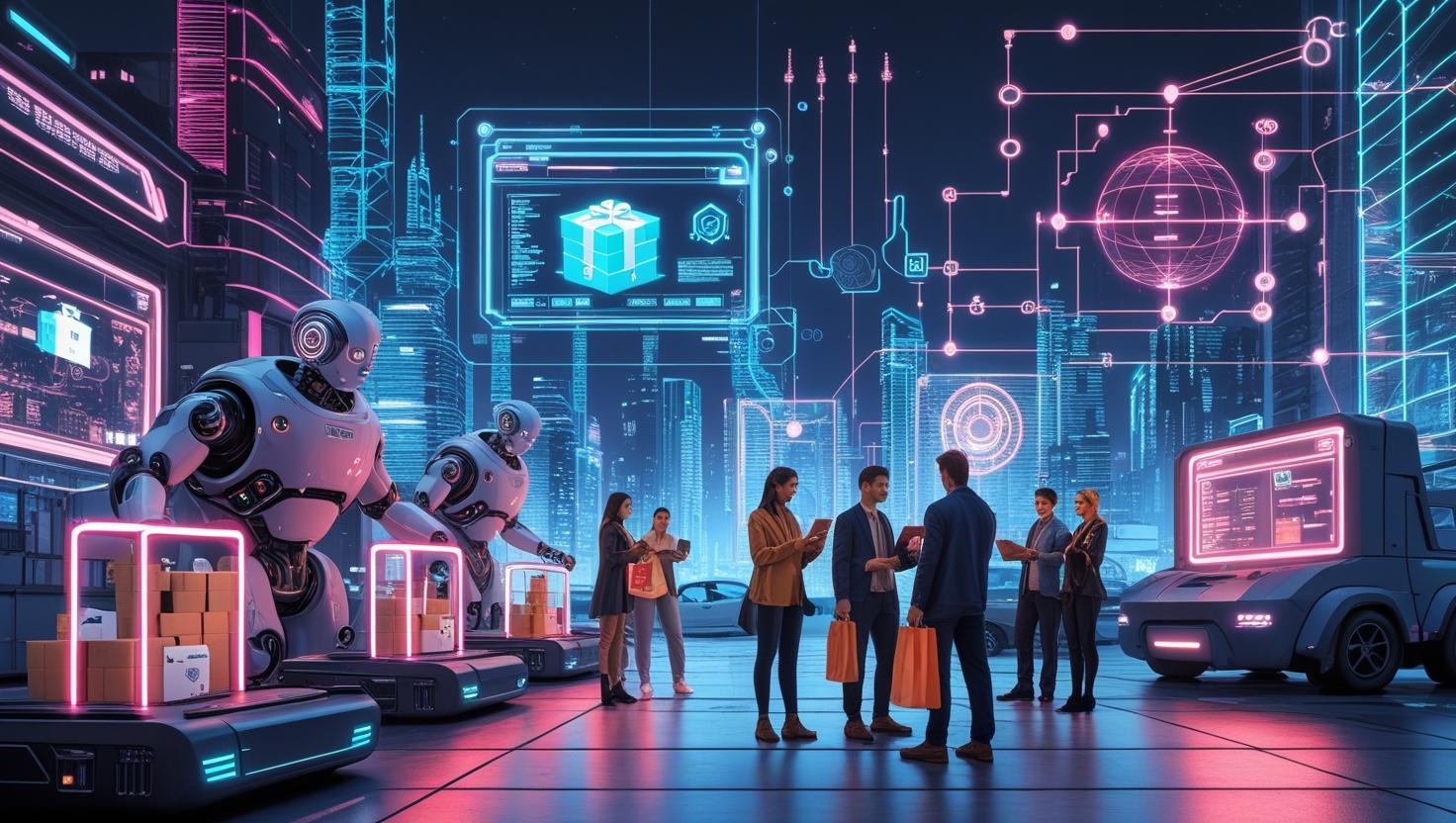
    E-commerce has helped businesses by helping them reach global consumers with just a single click. The introduction of AI in e-commerce has completely changed the way online businesses operate by leveling up efficiency, innovation, and customer experience.  

    AI has enormous potential for everything from inventory management to suggesting personalized products. But these potentials also bring with them practical difficulties that companies need to handle carefully.
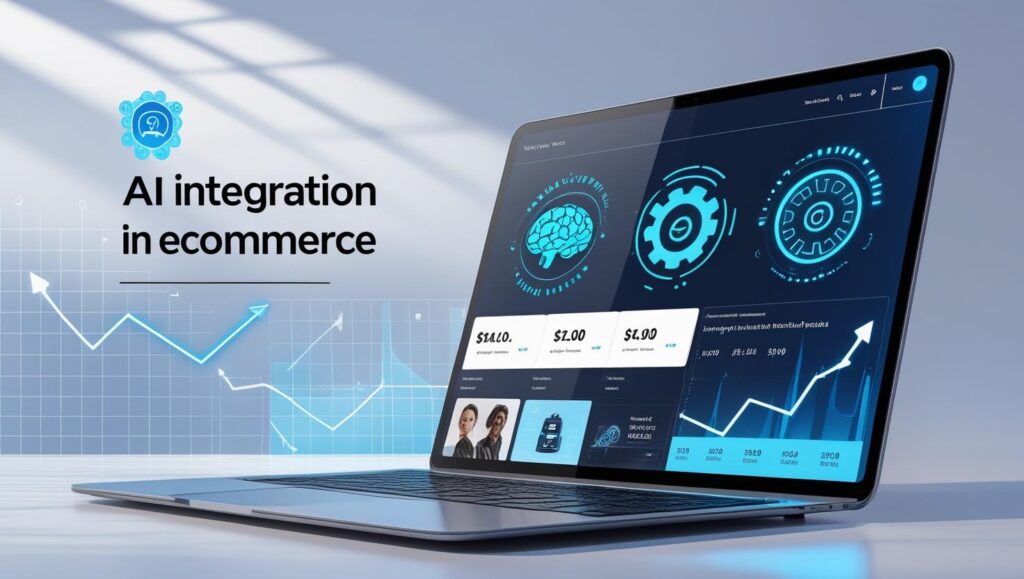
    In this article, we will explore the enormous role of AI in eCommerce, highlighting the opportunities and challenges present and faced.

    Opportunities: AI Revolution in eCommerce

    1. Hyper-Personalized Shopping Experience 

    Competition is high, and customer demand has increased. Customers now demand more than just a transaction and exchange– they want a carefully organized and managed experience. 

    AI provides just that by tracking and analysing user behaviour, their purchase history, demographics, and even real-time behaviour to personalize product recommendations.

    Example: –

        A customer who just bought travel accessories will be recommended travel-sized essentials. Platforms like Amazon and Noon excel at this.

    1. Smarter Search and Voice Commerce

    AI has replaced the endless scroll in the search for a specific product with natural language search and image-based search. Customers can now even use voice assistants like Alexa or Google Assistant to help them find what they are looking for!

    Example: –

        The customer takes a reference photo of a shirt they’re looking for and uses AI, which leads them to stores with similar or exact style and colour.

    1. 24/7 AI Chatbots for Customer Support

    AI-powered chatbots can immediately respond to thousands of consumer inquiries, including purchase monitoring and return processing. 

    They reduce human workload, have faster response times, and can work 24/7 without getting tired.

    Example: –

         AI-powered chatbots are used by big brands like H&M to assist consumers with queries, purchases, and searches.

    Some chatbots, like Tidio or Drift, even improve their responses by learning from past conversations.

    1. Predictive Analytics and Dynamic Pricing

    AI can predict future trends by analysing current trends and demands of consumers, like what will be in demand next, or which regions show growth potential.

    In addition to this, businesses can now automatically modify prices in response to demand, seasonality, inventory levels, rival pricing, and consumer segments, all thanks to AI.

    Example: – 

        Many retail stores like Walmart, Target, and eBay would use AI to adjust prices based on market trends, competitive pricing, and demand.

    1. Inventory and Supply Chain Optimization

    AI is beneficial in keeping track of inventory needs and restocking. It also helps to detect any disruption in the supply chain early. Financially, this is a great method as it prevents over- or understocking and overall improves efficiency. 

    Example: –

        AI is used by platforms such as ClearMetal and Llamasoft to provide real-time insights into logistics and inventory management.

    1. Fraud Detection and Cybersecurity

    Detecting and preventing fraud is crucial for an e-commerce business. Machine learning models help with just that by analyzing transaction data to spot unusual behaviour, like mismatched locations and several failed transactions.

    Along with this, it can also identify fake reviews and flag suspicious accounts.

    Challenges: Real Hurdles in AI Adoption

    Though the benefits of AI in eCommerce are a lot. Businesses still go through many challenges while integrating AI into their work.

    1. Data Privacy and Ethical Concerns

    To get any work done, AI requires data. And AI collecting, storing, and analysing user data raises serious concerns since any mistake while handling the data can lead to bad consequences. 

    Due to this, the user may sue or take legal action against the company, which could severely damage the company’s reputation, affecting their sales.

    Important regulations to consider are: – 

    • GDPR (Europe)
    • CCPA (California)
    • PECA (Pakistan)

    It is also very important that you give insight to the user about how and where their personal information will be used.

    1. High Development and Maintenance Costs

    Integrating AI can be very expensive, especially for new or small businesses with a limited financial budget and limited resources.

    AI implementations require: –

    • AI professional
    • Large datasets 
    • Advanced infrastructures
    • Constant monitoring and updates 
    • Implementing AI in an already existing system 

    The cost of these requirements can be very substantial for a business, especially for a startup.

    Solution: –

         Make use of plug-and-play AI solutions like Google Cloud AI, Shopify’s AI integrations, or ready-made ML APIs that need little configuration.

    1. Integration with Older Systems

    Older and outdated sites and systems were not designed with AI in mind. And so, integrating AI into these systems can raise compatibility issues during the adoption process, creating friction.

    Solution: – 

    Start with modular AI integrations that complement your current tech stack, such as recommendation engines or chatbots.

    1. Over-Automation and Loss of Human Touch

    While AI and automation may save money, time, and human labour, users still prefer humans over AI when it comes to complaints and suggestions, since AI can come off as cold and rather direct.

    Humans can easily get overstimulated and stressed, and personal interaction plays a crucial role in handling such situations because AI is not aware of how human emotions work. So, for a smooth-running business, finding and adapting the right balance between both is important.

    Real World Examples: How AI is Being Used in E-commerce

    • Alibaba automatically creates thousands of product descriptions per second using an AI copywriting tool.
    • eBay uses AI for visual search, fraud detection, and image recognition.
    • Shopify gives retailers more power with features like AI-driven inventory management, smart retargeting, and predictive analytics.
    • AI is used by Daraz (Pakistan) for user interaction, logistical tracking, and product recommendations.

    Putting aside big companies, even smaller startups are becoming creative with AI integration. 

    Example: – 

        Savyour, a Pakistani eCommerce platform, to improve customer retention, is investigating AI-powered reward schemes and customization tools.

    Future AI Trends for eCommerce

    1. AI-Generated Content

    AI tools like ChatGPT, Jasper AI, and Copy.ai will be commonly used to generate product descriptions and promotional emails, along with personalized content.

    1. AR and AI Integration

    Customers can “try before they buy” with AR thanks to AI, which also helps to customize the UX experience. Imagine interior design visualizers or virtual changing rooms driven by AI, which would make the shopping experience more fun and effortless.

    1. Voice Commerce Growth

    The use of AI assistants for voice search and purchasing will increase dramatically as smart speakers become more prevalent in homes. e.g Alexa.

    How Largify Solutions Integrates AI into eCommerce

    Largify Solutions, a tech company, has helped many businesses and even startups with the integration of AI. 

    Some of those roles include: – 

    • Custom AI-Powered Recommendation Engines
    • Predictive Analytics & Dynamic Pricing Tools
    • AI Chatbots & Customer Support Automation
    • Seamless Integration with Legacy Systems

    Conclusion 

    AI is not a trend that will come and go. As time passes by, the use of AI has only increased. It has become the future of eCommerce, and businesses that implement AI in their systems will be able to effortlessly perform streamlined operations and stay ahead in any competition.

    However, just like it is said, “With great power comes great responsibility”, meaning that AI should be used with care. Any adoption strategy should prioritize data security, ethical considerations, and careful human-AI cooperation. 

    Don’t Know Where to Start?

    It can be confusing for a person who is not familiar with tech stuff as to where they should start with AI integration. 

    But worry not! Here is a simple roadmap on how to get started: –

    • Start with chatbots, or automated customer assistance.
    • Introduce intelligent search and recommendations.
    • Integrate dynamic pricing and predictive analytics gradually.
    • Examine ethical usage and privacy compliance.

    Even with this roadmap, it can be hard to actually implement AI in your e-commerce business. For this, an easy and best solution is to reach out to a tech company that will help and guide you through these procedures.

    A perfect example would be Largify Solutions. They have helped many e-commerce businesses and continue to do so in the upcoming years. 

    Many clients have shown their satisfaction in working with them because they leave no communication gaps and thoroughly discuss every matter with their clients. For them, building trust is also a priority, along with delivering the best results.

  • The BEST 5 ERP TRENDS IN 2025

    The BEST 5 ERP TRENDS IN 2025

    Enterprise Resource Planning (ERP) systems are now a crucial component of how modern businesses operate. ERP helps organizations streamline their core business processes, including finance, HR, manufacturing, sales, and supply chain, and provides a single source of truth.

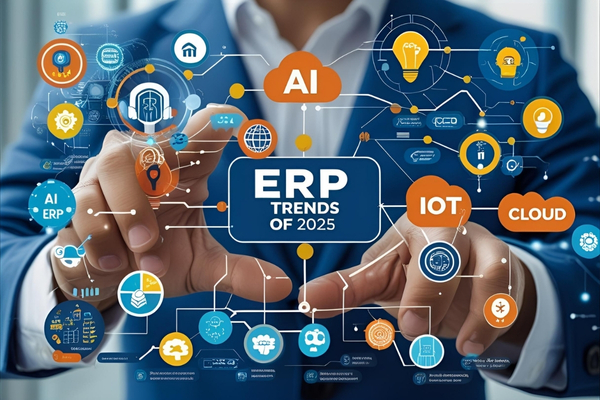
    ERP system with AI and cloud integration in 2025

    Since 2022, the ERP market has seen an increase of 8%. And studies show that 1.4 million companies will spend $183 billion on ERP systems. This figure makes up a whopping 17.9% of total IT software spend, and 5% of overall IT spending. This is no surprise given that businesses rely a whole lot on ERP as it eliminates unnecessary processes and automates tedious tasks, which cuts down on costs. 

    In this article, we will discuss the top 5 ERP trends defining 2025.

    1. AI-Driven ERP for Faster, Smarter Decision-Making

    Al and ML aren’t just a trendy term, nor does it come in a ‘maybe’ option–it is essential. The ERP platforms are converting into an intelligent digital system, giving real-time information and the ability to make predictions that speed up the process of making decisions.

    Key Benefits: 
    • Predictive forecasting: AI models are used to predict maintenance schedules, inventory needs, and sales.
    • Virtual Assistants: Chatbots speed up processes, make navigation easier, and provide answers to customer questions.
    • Anomaly detection: AI identifies any operational or financial issues present before they become a more serious issue.
    Example: –

    Largify Solutions integrates AI-based analytics and automation into its ERP deployments. Many people are already embedding AI in their cloud ERPs to generate real-time insights and suggest process improvements. 

    1. Cloud-Native ERP Becomes the Default

    Cloud ERP solutions are now being rapidly adopted by businesses for growth and faster adaptation to changing market needs. Previously, on-premises ERP systems were used as they couldn’t entrust their business to the cloud. But that has changed due to the flexibility, scalability, and cost-effectiveness of cloud ERP.

    Gartner studies show that in 2025, 90% of new ERP deployments will be cloud-hosted. Statista reports that ERP software revenue is estimated at about $55.88B in 2025, reaching $65.29B by 2029, seeing an annual growth of 3.97%.

    Cloud ERP benefits both small medium-sized enterprises (SMEs) and large enterprises alike.

    Key Benefits: 
    • Extensibility: Easily expands to accommodate business expansion.
    • Savings: Lowers the cost of IT and infrastructure upkeep.
    • Anywhere Access: Facilitates decentralized teams and remote work.
    • Real-time insights: Improve decision-making based on data and agility.
    • Easy Integration & Automatic Updates: Maintains systems up to date and linked.
    • Support for Edge Computing: Enhances dependability and speed near data sources.
    Example: –

    Largify Solutions offers industry-specific modules for sectors including e-commerce, shipping, and textiles using microservices architecture. They also offer safe, high-availability ERP hosting settings that facilitate round-the-clock access, real-time data syncing, and quick disaster recovery thanks to partnerships with cloud providers like AWS and Azure.

    Global businesses can operate with real-time data across finance, human resources, and logistics from a single platform with SAP S/4HANA Cloud.

    1. Modular and Industry-Specific ERP Solutions

    Traditional monolithic ERP solutions are now the talk of the past. In 2025, companies will need industry-specific, modular ERP suites that are easy to scale, install, and adapt.

    Trend Highlights:
    • Vertical ERP systems for shipping, manufacturing, healthcare, and education.
    • Configurable modules (HR, finance, CRM, supply chain) using industry presets.
    • Platforms with minimal code that enable internal IT departments.
    • Manufacturing ERP provides capabilities for supply chain management, quality control, and real-time production monitoring. 
    • Healthcare ERP manages patient records, compliance requirements, and inventory for medical supplies. 
    • Retail ERP enhances omnichannel retail operations, inventory tracking, and customer relationship management. 
    Example: –

    Largify Solutions has created ERP templates that cut deployment times by 40% for SMEs in the pharmaceutical, educational, and agricultural sectors. Their adaptable modular strategy enables customers to begin simple and add features as required.

    For industries like healthcare, fashion, and automotive, customized ERP suites are provided that enable better compliance and a quicker return on investment.

    1. ERP and IoT Convergence

    ERP ecosystems now significantly incorporate the Internet of Things (IoT). ERP systems are receiving real-time data from devices in manufacturing facilities, warehouses, and delivery fleets for real-time monitoring and optimization.

    IoT capabilities of ERP systems gather and evaluate real-time data from linked devices, including sensors, GPS modules, and machines, to facilitate more intelligent decision-making.

    Alphabet Inc. CEO Sundar Pichai emphasizes the value of technology integration by saying, Organising the world’s information across every input, making it accessible via any output, and combining the world’s information with the information in YOUR world, in a way that’s truly useful for you.” This statement explains how the IoT ERP ecosystem works by combining external and internal data sources into a single, actionable platform.

    Key Benefits: 
    • Tracking assets and inventory in real time.
    • Predictive equipment maintenance.
    • Sustainability reporting and analytics on energy use.
    Example: –

    Largify Solutions incorporates fleet GPS systems into ERP dashboards in order to track deliveries and optimize routes in real time. Additionally, they provide IoT-enabled modules for pharmaceutical cold-chain monitoring.

    IoT sensors in factories are integrated with Microsoft Dynamics 365 to automatically update ERP dashboards on equipment health and production output.

    1. Enhanced ERP Cybersecurity and Compliance

    ERP systems hold sensitive business data, so as they become more connected and cloud reliant, cybersecurity, regulatory compliance, and data security have become critical. Customer data, proprietary systems, and intellectual property are all at risk from breaches, which can also lead to operational disruption, harm to one’s brand, and legal repercussions.

    In order to avoid these risks, ERP business transformation strategies must incorporate end-to-end security measures, including encryption, access controls, user training, and incident response procedures.

    With growing threats and data protection laws like GDPR and Pakistan’s PECA (Prevention of Electronic Crimes Act), ERP vendors are strengthening their defences.

    Cyber-Security Trends in 2025:
    • Multi-factor authentication and role-based access control.
    • ERP-integrated real-time threat monitoring.
    • Features for localization and data residency for compliance.
    Leading Capabilities:
    • Zero Trust Architecture (ZTA): Before allowing access, ZTA strictly verifies the device and the user.
    • Real-Time Threat Detection: AI keeps an eye on user behaviour and spots unusual patterns.
    • Integrated SOC 2, GDPR, HIPAA, and Industry Compliance: automates data classification, access control, and audit tracking.
    • Blockchain Integration: To ensure tamper-proof recordkeeping in domains like finance or supply chain, some ERPs now include blockchain technology.
    Example: –

    Largify Solutions helps clients across South Asia and the Middle East comply with local and international regulations. They put strong security measures in place and provide ERP compliance audits that are suited to the demands of particular industries, such as banking, education, and pharmaceuticals.

    Oracle Fusion Cloud ERP includes built-in compliance tools, risk management, and automated audit trails.

    Conclusion 

    2025 is not just about updating ERP systems; it’s about running your business in a smarter, agile, and data-connected way. From AI-enhanced decision-making to industry-specific cloud modules and IoT integration, ERP systems are evolving into intelligent enterprise platforms.

    It is about time that companies that are waiting for the perfect time implement these steps now before they get left behind in the competition.

    Ready to Future-Proof Your Business?

    At Largify Solutions, by fusing local knowledge with global innovation, we enable companies to fully utilize ERP. We can assist you whether you’re moving to the cloud, automating processes, or require an ERP tailored to your business. 

    Contact us today! and schedule a free consultation or ERP readiness audit.

  • Why every business needs a Scalable e-commerce Solution in 2025

    Why every business needs a Scalable e-commerce Solution in 2025

    In this fast-paced world, where the competition is pretty high and the global market is more accessible, businesses can no longer depend on outdated systems. Imagine a person visiting your website to browse and buy something, but when they go to confirm the order, the website crashes or stops responding, so the person goes to another site, and you end up losing a customer. 

    So, in order to avoid such situations, businesses need scalable e-commerce solutions.

    Changes in consumer behavior

    As compared to before, when people would shop physically, they now opt for the option to shop online with only one touch: – 

    • Shopping via mobile apps and social media is common.
    • They need fast services, with one-click checkouts and fast deliveries.
    • So much is expected from businesses and brands that they maintain a consistent and efficiently working website 

    Problems with static e-commerce systems 

    The older ecommerce sites are built on inflexible infrastructure, due to which such problems are faced: – 

    • Websites are crashing due to high traffic, like during sales or on black friday.
    • Companies find it difficult to incorporate new features like real-time tracking or AI chatbots.
    • Limitations in language, currency, and taxes make international expansion difficult.

    What makes a scalable e-commerce solution so important?

    Handles website growth without problems: – 

    Scalable grows with your site. Meaning even if your orders grow from 50 to 50,000 in a day, scalable will manage all that without the need to rebuild everything.

    Reduces long-term costs: –

    Investing in scalability results in seamless operations and fewer interruptions as compared to paying again and again for patchwork improvements.

    Enhancing customer experience: –

    With a scalable backend, it becomes easier to implement and bring about changes in the website for the convenience of the user and to make sure that they keep coming back.

    Optimizes operational efficiency: – 

    A scalable system can boost and automate processes like inventory, shipping, and analytics, all while allowing you to manage these from a single hub.

    Key Elements of Scalable eCommerce Infrastructure

    • Web hosting provides the space and tools to make your site accessible online.
    • Database management organizes data efficiently, simplifying website logic and code, and supporting rapid updates with scalable solutions like NoSQL.
    • Cloud hosting (like AWS, Azure) allows scalability and to adjust resources.
    • Multilingual and several currencies to reach a worldwide audience.

    Big platforms like Shopify Plus, BigCommerce Enterprise, and Adobe Commerce are built with scalable e-commerce.

    Future growth

    To prepare for future growth, it is important that we keep constant monitoring and optimization.

    Create a feedback loop to continuously improve and modify your design and codebase for maximum scalability, and use monitoring tools to track performance indicators in real-time.

    Conclusions: implement them immediately!

    Don’t wait till it’s too late! 2025 is the year of fast technology, and if your business is not ready to scale, then you are already falling behind.

    For businesses that are finding it hard to integrate scalable e-commerce, they should reach out to providers that can provide them with specific benefits. 

    A scalable e-commerce solution ensures that the site remains a solid foundation for expansion, innovation, and a strong competitive advantage.